✦The Sourcing Brief spotlight to 218k+ subscribers
Fabric Construction Decision Tree
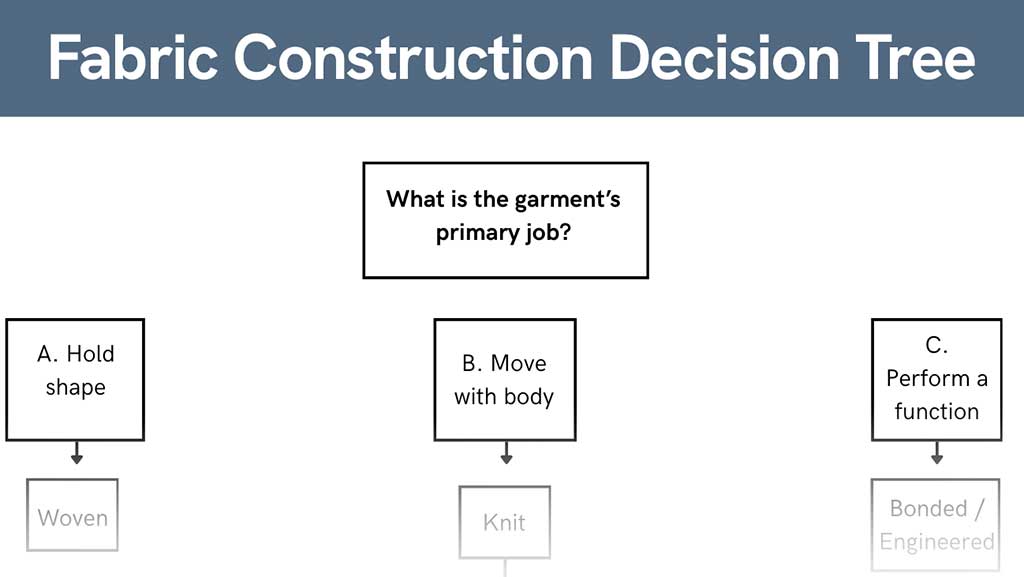
Woven, knit, or bonded — the wrong choice at the fabric stage cascades into sampling failures and production delays. This two-question framework narrows every fabric decision in under a minute.
What's Inside
Fabric Construction Decision Tree
Choosing the wrong fabric construction is one of the most common (and costly) mistakes early-stage designers make. This decision tree gives you a clear framework for narrowing your choice before you speak to a supplier.
Woven Fabrics
Woven fabrics are made by interlacing two sets of threads at right angles. They have low stretch (unless elastane is added), hold structure, and press cleanly — making them ideal for tailored and formal garments.
- Best for: blazers, trousers, dress shirts, denim, structured skirts
- Key characteristics: stable, drapey, fray at cut edges
- Common constructions: plain weave (poplin), twill (denim, chino), satin
Knit Fabrics
Knit fabrics are made by looping yarn together. They have inherent stretch in at least one direction — and often all four — and conform to the body without tailoring.
- Best for: T-shirts, leggings, activewear, casual dresses, undergarments
- Key characteristics: stretchy, comfortable, curls at cut edges, can ladder if snagged
- Common constructions: jersey (single knit), rib, interlock, French terry, fleece
Bonded & Non-Woven Fabrics
Non-woven fabrics are made by bonding fibers together through heat, chemical, or mechanical processes — not by weaving or knitting. They don't fray and are often used for technical applications.
- Best for: interlining, fusible backing, some outerwear shells, technical garments
- Key characteristics: no stretch, no fraying, limited drapability
- Common constructions: felt, fusible interfacing, Tyvek, some vegan leather
How to Use the Decision Tree
The decision tree narrows your choice with two questions: Does your garment need to stretch? And does it need to hold a structured silhouette?
- Needs stretch + casual fit → knit
- Needs structure + formal look → woven
- Technical / no-fray requirement → non-woven or bonded
- Needs stretch but still tailored → woven with elastane blend (e.g. stretch ponte)
Who it's for
Emerging designers choosing fabric for a new style, buyers evaluating substitutions, and students learning the foundations of textile selection.
What you get
- Visual decision tree: two questions to the right fabric type
- Descriptions of woven, knit, and non-woven properties
- Instant PDF download
- Free, no credit card required
Get the Fabric Construction Decision Tree for Free
Enter your email and we'll send the PDF straight to your inbox.
Free download. No spam.
Keep Going