✦The Sourcing Brief spotlight to 218k+ subscribers
Garment Quality Checklist
Evaluate apparel like a product developer. Use this checklist during sample reviews, production inspections, or final quality control to catch construction and workmanship issues before they turn into costly revisions, returns, and delays.
What's Inside
Garment Quality Checklist
A printable inspection checklist that walks you through every point that matters when reviewing a garment, from construction and cutting to fabric, finishing, trims, and fit. Identifying issues early reduces costly revisions, returns, and production delays.
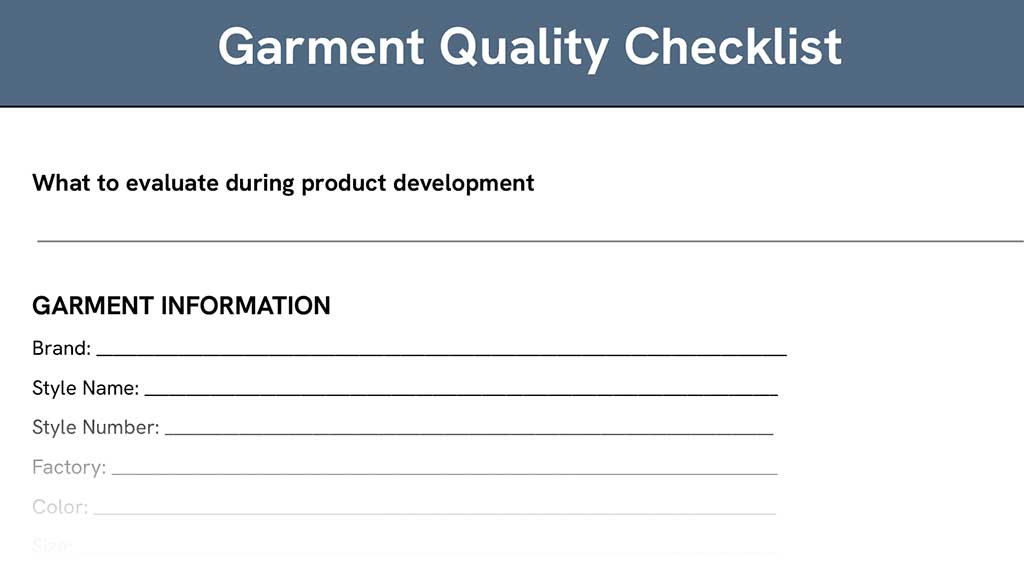
Garment Information
Log the essentials at the top so every inspection stays traceable back to a specific style, sample stage, and inspector.
- Brand, style name, and style number
- Factory, color, and size
- Sample stage: Counter Sample, Fit, Salesman, Size Run, PPS, or TOP
- Inspector name and inspection date
Construction
Workmanship is where quality issues surface first. Check the stitching, seams, and reinforcement against your tech pack.
- Seam quality: no open seams or seam slippage, consistent throughout
- Reinforcement: bar tacks or double stitching at stress points (pockets, belt loops, fly, crotch, underarms)
- Seam type and stitch density (SPI) match tech pack specifications
- Stitch consistency: even spacing, no skipped stitches, no puckering, balanced thread tension, no loose threads
- Thread quality matches tech pack (color, weight, fiber content)
- Overall construction meets brand quality standards
Cutting & Layout
Poor cutting and layout can't be fixed later. Confirm the fabric was laid and cut according to the tech pack.
- Pattern matching: prints, plaids, or stripes align at all seams as specified
- Repeat direction: print repeat orientation matches tech pack
- Stretch direction matches tech pack specification
- Nap direction matches tech pack specification
Fabric Quality
The finished garment is only as good as the fabric. Verify it matches the approved swatch and holds up to wear.
- Fabric weight (GSM) matches approved swatch and tech pack
- Hand/handfeel consistent with approved sample
- Stretch and recovery: meets performance requirements, returns to shape
- Pilling resistance: no pilling after wash or abrasion testing
- Colorfastness: no fading, bleeding, or transfer after washing
- Shrinkage within acceptable tolerance (typically <3-5%)
- Opacity: no unexpected sheerness under tension
- Grain alignment: fabric grain runs straight, no torque or skew in panels
- No weaving or knitting defects, holes, snags, slubs, or damage
Finishing Details
Finishing is what separates a sample from a sellable product. Inspect the details a customer will notice.
- Edge finishing: no raw edges, fraying, or loose fibers
- Hems: clean, even; technique matches tech pack (topstitch, blind, rolled)
- Lining attached neatly, no bunching or pulling
- Labels: placement, content, and attachment match tech pack
- Pressing: seams pressed flat, no shine or burn marks
- Cleanliness: no oil stains, glue, chalk, or adhesive marks
- Hang tags and packaging match brand specifications
Trims & Hardware
Trims and hardware are common failure points in the field. Confirm each is correct, secure, and functional.
- Attachment: all trims and hardware securely attached
- Finish quality: no rough edges, burrs, or defects
- Correct specification: matches tech pack (style, size, color, finish)
- Function: all hardware operates smoothly and correctly
- Placement as indicated on tech pack
Fit & Measurements
Fit determines fit-to-sell. Measure against the graded spec sheet and compare to your approved fit sample.
- Key measurements match graded spec sheet within tolerance
- Symmetry: left and right sides match (if applicable)
- Fit consistency: matches approved fit across all sizes
- Ease and proportions match approved fit sample
- Garment balance: hangs evenly on body/form, side seams fall straight
- Sleeve/hem even on both sides, except for asymmetrical garments
Approval Status & Next Steps
Close every inspection with a clear verdict and the next action so nothing stalls between stages.
- Status: Approved, Approved with comments, or Rejected
- Next step: Counter Sample #, Size Run, Pre-Production, or TOP
- Record comments to hand off to the factory or your team
Who it's for
Emerging designers, product developers, and quality control teams who want to catch construction issues before they become production problems — whether reviewing counter samples or inspecting final production.
What you get
- 8 sections with checkpoints and examples
- Instant PDF download
- Printable & digital format
- Free, no credit card required
Get the Garment Quality Checklist for Free
Enter your email and we'll send the PDF straight to your inbox.
Free download. No spam.
Keep Going