✦The Sourcing Brief spotlight to 218k+ subscribers
Knits: Part 3—Innovation: Reimagining What a Knit Can Be
The Shift From Fabric to Function
Knitwear becomes transformative the moment you stop asking what it is and start defining what it must do. Once you understand knit construction and sourcing, the conversation changes.
Knit fabrics, by nature of their looped structure, offer adaptability that makes them one of the most expansive categories in modern apparel. Innovation happens when material knowledge becomes material advantage—where performance, sustainability, and body-mapped engineering reshape what a knit garment can be.
Selecting the right knit can:
-
Improve durability and garment longevity
-
Enhance everyday comfort or athletic performance
-
Support sustainability goals
-
Shape silhouettes and create expressive, functional designs
Strategic knit selection transforms your role from designer to product engineer, where construction technique drives innovation.
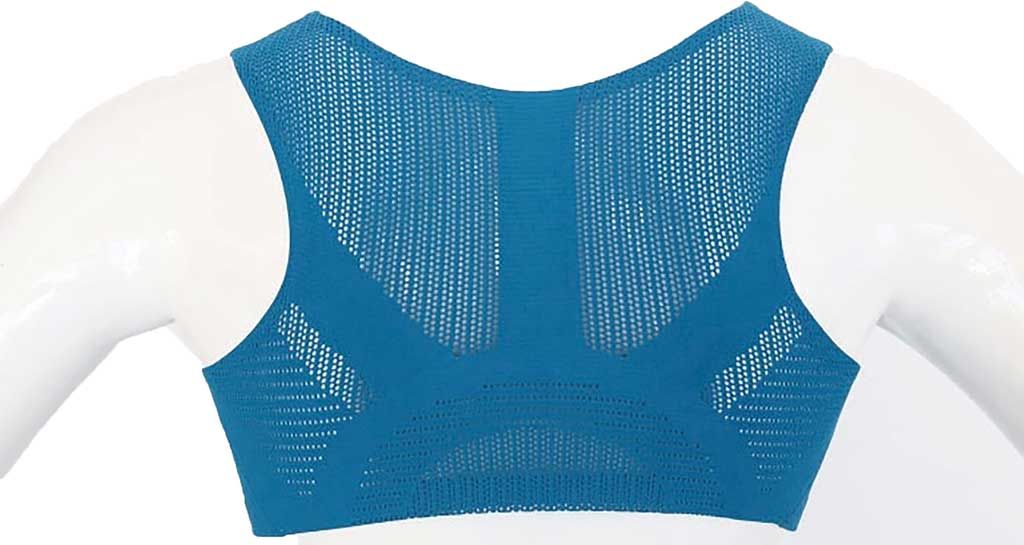
Movement Mapping: Designing With the Body
Movement mapping analyzes where the body bends, stretches, compresses, overheats, or experiences friction. It asks a simple question: How does the garment interact with the body in motion?
Body mapping is often associated with activewear, but the concept is increasingly shaping knit sportswear design. Designers are using knit engineering to adjust the structure across different areas of a garment.
This might include:
-
Varying density and stretch to match movement zones
-
Integrating mesh or open knits in high-heat areas for breathability
-
Placing ribbed panels in shoulders, elbows, or waist for flexibility
-
Using gradients in fabric weight or construction to control drape and comfort
Knit fabric’s elasticity mirrors human movement, making it ideal for movement-mapped design. Emerging designers like Oscar Ouyang are using engineered knit mapping to create sculptural silhouettes without heavy internal structure.
Instead of cutting a shape into fabric, you program shape into the fabric itself.
Knit Technology Innovation
Innovation in knit textiles is no longer limited to performance apparel. Technological advancements are pushing knit fabric innovations into new fashion territories.
Seamless 3D Knitting
Whole-garment knitting creates pieces directly in their final form with minimal seams, reducing cutting waste and enabling complex shapes beyond traditional construction.
Advanced Finishing Treatments
Modern knit fabrics incorporate finishes that improve cooling, durability, and comfort—including antimicrobial and odor-control technologies now appearing in everyday knitwear.
Smart and Interactive Textiles
Knit construction is particularly suited to smart textiles because its stretch and conformity allow electronics to move with the body. Medical wearables represent one of the most significant applications—knit-integrated sensors can monitor heart rate, muscle activity, and body temperature while remaining comfortable against the skin.
Conductive yarns knitted directly into fabric enable touch-responsive surfaces, heated garments, and biometric monitoring without rigid components. These innovations are moving from clinical settings to consumer wellness and athletic apparel.
Near-field communication (NFC) chips are also appearing in garments, providing authentication, care instructions, and supply chain traceability when scanned with a smartphone. While NFC can be integrated through various methods—knit, woven, embroidered, or heat-pressed—flexible NFC tags designed for washing and wear are increasingly common in knitwear. These technologies hint at a future where knitwear combines fashion, function, and data.
Beyond conductive yarns, elastomeric optical fibers (EOFs) are incorporated into next-generation textiles—they work with knit structures rather than against them.
As the fabric stretches, bends, or compresses, the light signal within the fiber changes—allowing the textile to detect movement, pressure, or even physiological signals like breathing or muscle activity. In practice, researchers are exploring applications like knit garments that can map body motion in real time for athletic performance, rehabilitation, or posture correction.

Knits Beyond Activewear
Knit fabrics have long been associated with basics, sweaters, and athletic apparel. That perception is rapidly changing.
Today, knit textiles appear across fashion categories:
-
Climate-adaptive collections
-
Tailoring and workwear
-
Adaptive and inclusive design
-
Eveningwear and luxury knit dresses
Structured knit constructions like Milano or interlock can provide the stability of woven fabric while maintaining flexibility. Knit blazers stretch and resist wrinkles. Sculptural knit dresses maintain shape without heavy linings.
Pro Tip: When working with development agencies or technical designers, bring fabric goals—not just sketches. Ask: What movement zones will the garment need?
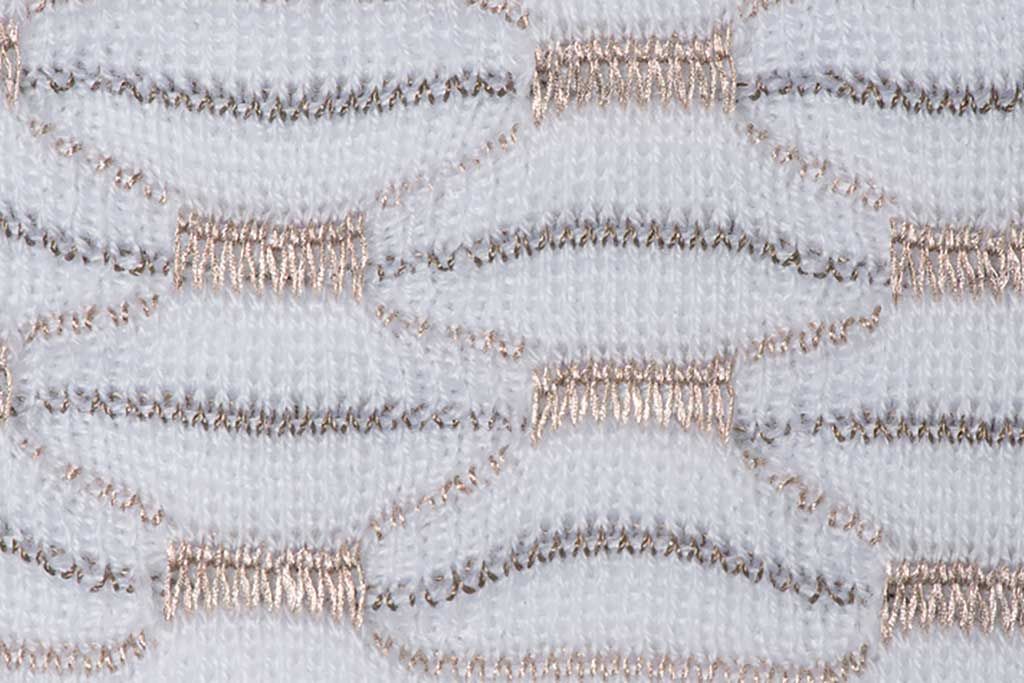
Since knit construction can create surface texture, designers can use stitches, ribs, and open structures as part of the garment’s visual language. This is not decoration—it is engineered visual storytelling.
Innovation in Action
Apparelmark's collaboration with Arc’teryx illustrates how knit innovation reaches production: flatlock seams construction for reduced bulk, interlock and tech fleece for performance layering, and merino blends for next-to-skin comfort.
PH5, founded by designer Wei Lin and engineer Mijia Zhang, is a New York label that treats knit technology as a design system. They use digitally programmed knit patterns to create texture, frequently working with innovative yarns and recycled synthetics while maintaining bold runway silhouettes. Getting from concept to production at this level depends on sourcing the right knit fabric partners from the start.
Knit footwear illustrates knit technology scaling beyond apparel. Knit uppers quickly accelerated—turning the concept into a fully engineered component rather than a cut-and-sew add-on.
Continued advancements in circular and intarsia knitting allow for customization with intricate colorblocking without bulk—unlocking seamless construction, zoned functionality, and scalable customization. Knit footwear isn’t just growing—it’s redefining how shoes are made.
The technique matters more than the branding.
Sustainable Fiber Innovation
Fiber innovation is transforming knit textiles. Regenerative cotton blends, recycled polyester, plant-based fibers, and low-impact dyes help brands maintain fashion aesthetics while reducing environmental impact.
TENCEL, Seacell, and emerging bio-based fibers—including algae or mycelium blended with cellulose—are expanding sustainable options for knitwear. While these are material innovations rather than knit-specific techniques, their breathability and biodegradability make them well-suited for knit applications like base layers and loungewear.
These innovations allow designers to merge function, sustainability, and style—expanding what a knit can do across everyday luxury, sculptural fashion, modular garments, and zero-waste production.
Sustainability as a Strategic Knit Decision
Sustainability begins with material selection, not marketing.
Strategic knit choices support sustainability by:
-
Using high-recovery fabrics improves garment lifespan
-
Reducing the need for additional trims or closures
-
Eliminating separate lining fabrics with engineered structures
The 2025 Textile Exchange Materials Market Report emphasizes that sustainable fashion must move beyond fiber choice alone. Durability and circular design are critical—knit construction naturally supports both.
Knit as Strategy
Beyond performance and sustainability, commercial knit fabrics also deliver strong emotional and cultural value in the marketplace. Their inherent softness and visible construction evoke a sense of craftsmanship, linking modern apparel back to heritage techniques and artisanal traditions, making even new designs feel familiar to consumers.
When material selection is treated as a strategic driver, designers can:
-
Cut waste and streamline production through seamless knit construction
-
Remove the need for linings and closures by engineering stretch and recovery directly into the fabric
-
Build inclusive, longer-lasting garments through strategic stretch and structure
Knits stop being a basic material choice. They become a design strategy.
When designers leverage material intelligence with intent, knit fabrics emerge as a critical platform for innovation—driving advancements across fashion, sustainability, and technology.
Part 4 shifts from selection to validation—how to test knit fabric quality based on real-world wear expectations, so your design performs exactly as intended.
Great design does not end with selecting a fabric. It continues with testing, validation, and performance in the real world.
FAQ
What is movement mapping in knitwear?
Body-mapping (often called movement mapping) is a knit engineering approach that analyzes where the human body bends, stretches, compresses, overheats, or experiences friction, then dynamically adjusts the fabric structure across those specific zones. Utilizing variable stitch architectures, machines seamlessly transition between high-density support structures, ribbed flex panels at joints, and open-mesh ventilation zones in high-heat areas. Rather than cutting separate panels, programmers build this zoned functionality into a single, continuous fabric panel.
Are knit fabrics sustainable?
Knit fabrics can support sustainability goals, but ecological impact depends on fiber sourcing, processing chemistry, and construction methods rather than marketing claims. From a construction standpoint, high-recovery knits extend garment lifespans, while engineered stretch reduces reliance on non-recyclable elastic trims. Furthermore, transitioning from traditional cut-and-sew methods to fully fashioned or seamless knitting significantly mitigates manufacturing waste. When paired with low-impact fibers like regenerative cotton, certified recycled polyester, or closed-loop cellulosics (such as TENCEL™ Lyocell or SeaCell™), knits offer a highly viable path toward circular design.
What is smart textile technology in knitwear?
Smart textile technology integrates conductive yarns, sensors, or near-field communication (NFC) chips directly into the knit matrix. Because knits conform snugly to the skin, they are ideal for biometric monitoring, localized thermal regulation, and touch-responsive surfaces. Engineers achieve this by co-knitting (plating) silver- or copper-coated conductive yarns alongside traditional fibers, or by threading flexible micro-electronics through protective, tubular knit channels. Advanced innovations, such as elastomeric optical fibers, measure shifts in light signals during fabric extension to precisely track respiratory patterns and joint movement.
How is 3D knitting different from traditional knit construction?
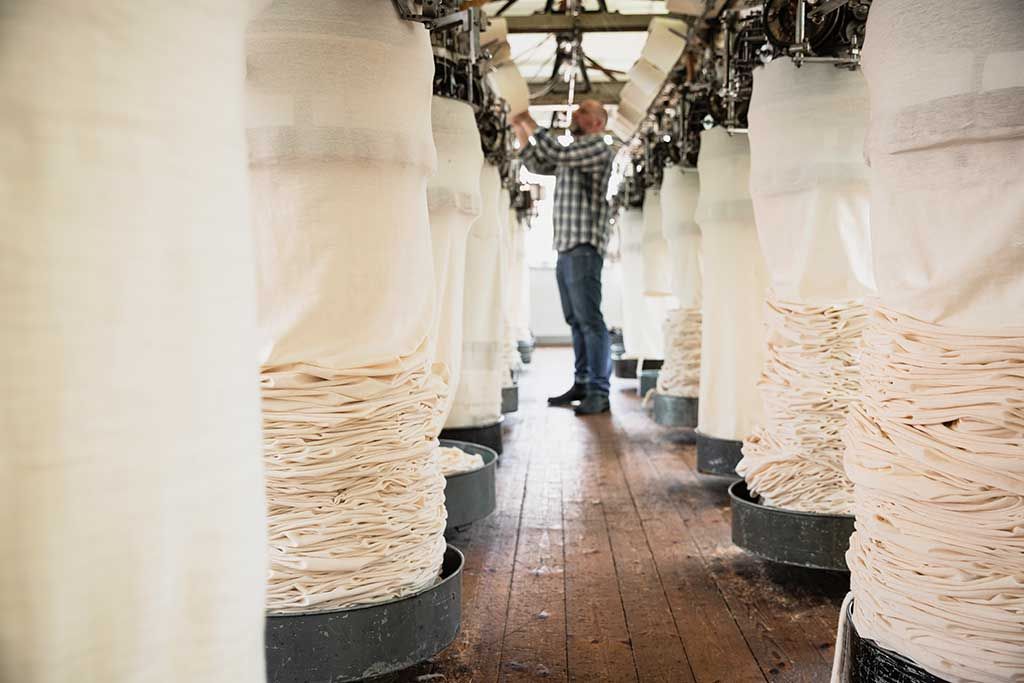
Seamless 3D knitting, commercially produced via technologies like Shima Seiki’s WHOLEGARMENT® or Stoll’s Knit and Wear, knits an entire three-dimensional garment directly in its final form with minimal to no seams. Traditional construction requires knitting fabric on either flatbed machines or high-speed circular (tubular) machines, which must then be slit open, cut into separate pattern pieces, and sewn together. This traditional cut-and-sew process typically wastes 15% to 20% of the raw fabric. In contrast, 3D knitting drops fabric waste to near 0%, eliminates seam-related chafing, and creates complex, organic contours that are impossible to replicate through flat cutting.
Related Articles:
Knits: Part 1—Why Fabric Construction Comes Before Design
Knits: Part 2—How to Source Quality Knit Fabric
Knits: Part 4—Evaluating Knit Fabric Performance: From Feel to Proof
Getting Started
For readers in the early planning stages:
I have a great idea for a fashion product – how do I start?
Essential Tips for Small Fashion Business Success
Go from Fashion Influencer to Fashion Entrepreneur using Fashion Index
What Is Adaptive Fashion? A Complete Guide to Inclusive Design
Apparelmark: Turning Fashion Ideas into Market-Ready Brands with Full-Service Design
Before You Source
For readers preparing to contact suppliers:
Are You Ready to Get a Sample Made?
11 Common Mistakes in Starting a Fashion Business
Lowering Costs For Start-Up Fashion Brands
How to Write a Sourcing Inquiry That Gets a Response
Understanding Knit Fabric Series
How to Start a Fashion Brand: An Essential Guide For Founders
Technical Knowledge
For readers building their production fluency:
A Beginner's Guide to Stitch Types
Thread Characteristics: From Fibers to Finishes
Plant-Based Leather Alternatives
Comments
Loading comments…