✦The Sourcing Brief spotlight to 218k+ subscribers
Knits: Part 2—How to Source Quality Knit Fabric
The Theory Becomes Real
Behind every polished garment is a series of decisions—where the fabric is sourced, how it’s tested, and whether the sample reflects the designer’s vision. This phase isn’t flashy, but it is foundational.
Finding and evaluating suppliers is where the details matter most. This phase determines whether your garment performs the way you envisioned.
Sourcing isn’t just about finding a fabric you like. It’s about verifying that a supplier can deliver that fabric—repeatedly, reliably, and without surprises. But how do you find and evaluate fabric suppliers that are right for your brand?
Where Knit Fabric Comes From
Knit fabric comes from mills and distributors. Finding the right one takes time—but the investment pays off in consistency and reliability.
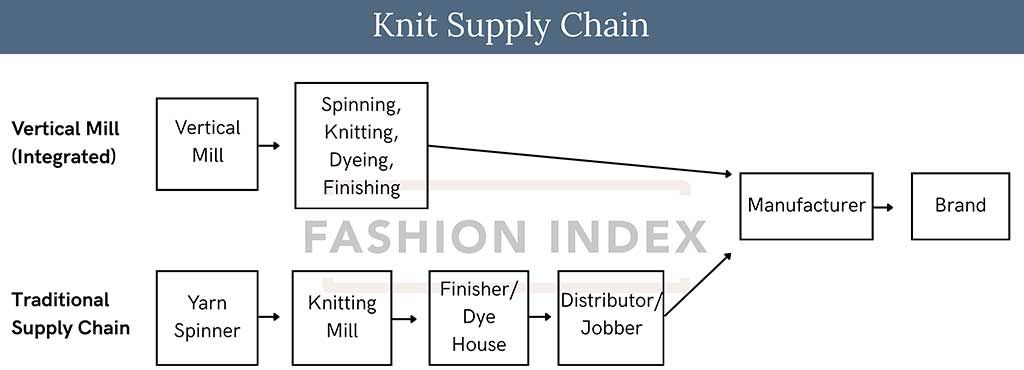
Understanding these distinctions helps you navigate supplier conversations and set realistic timelines. Each step affects quality, consistency, and repeatability.
Stock Fabric vs. Custom Development
-
Stock fabric: Ready-made, available immediately, lower minimum order quantities (MOQs), limited customization
-
Custom development: Made to your specifications (color, weight, finish), higher MOQs, longer lead times
Most startups begin with stock fabrics and move to custom development as they scale.
Greige vs. Finished Fabric
-
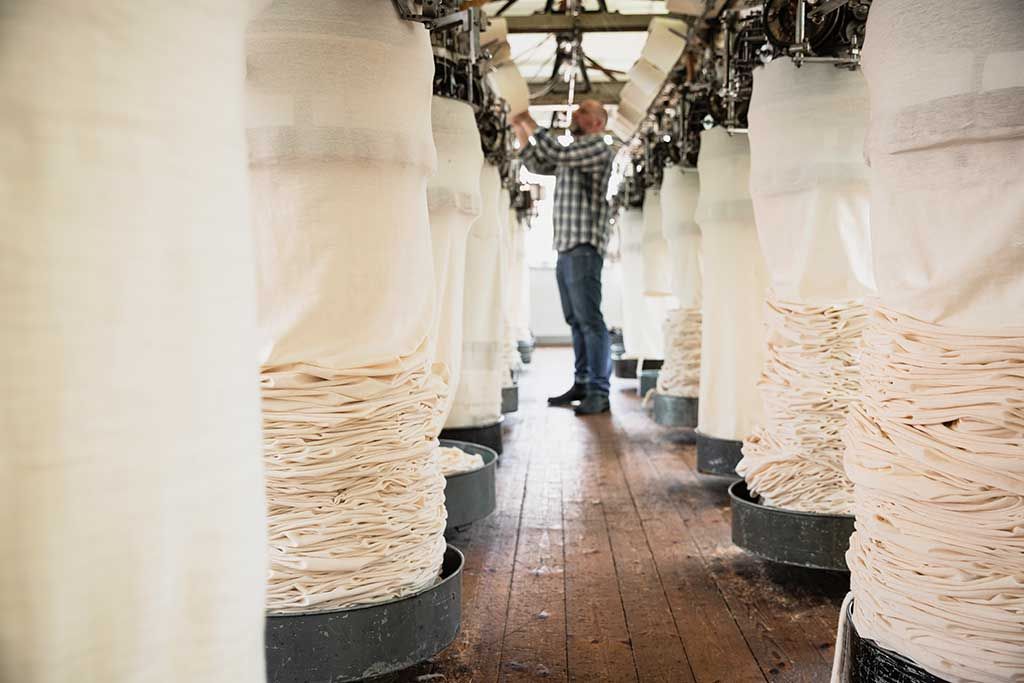
Greige (gray goods): Unfinished fabric straight from the knitting mill—requires dyeing and finishing
-
Finished fabric: Ready to cut and sew
Understanding MOQs
Most suppliers have MOQs. Understanding these is crucial, not just for sampling, but for planning future production.
Every supplier is different, but typical ranges are:
-
Stock fabrics: 1-10 yards for sampling, 50-100 yards for production
-
Custom fabric: 500-3,000 yards
Where to Find Knit Fabric Resources
A good supplier is not only selling knit fabric—they are providing information. They recommend applications and advise on performance. Fabric quality is the priority, but location, services, and communication matter too.
Small-batch friendly suppliers:
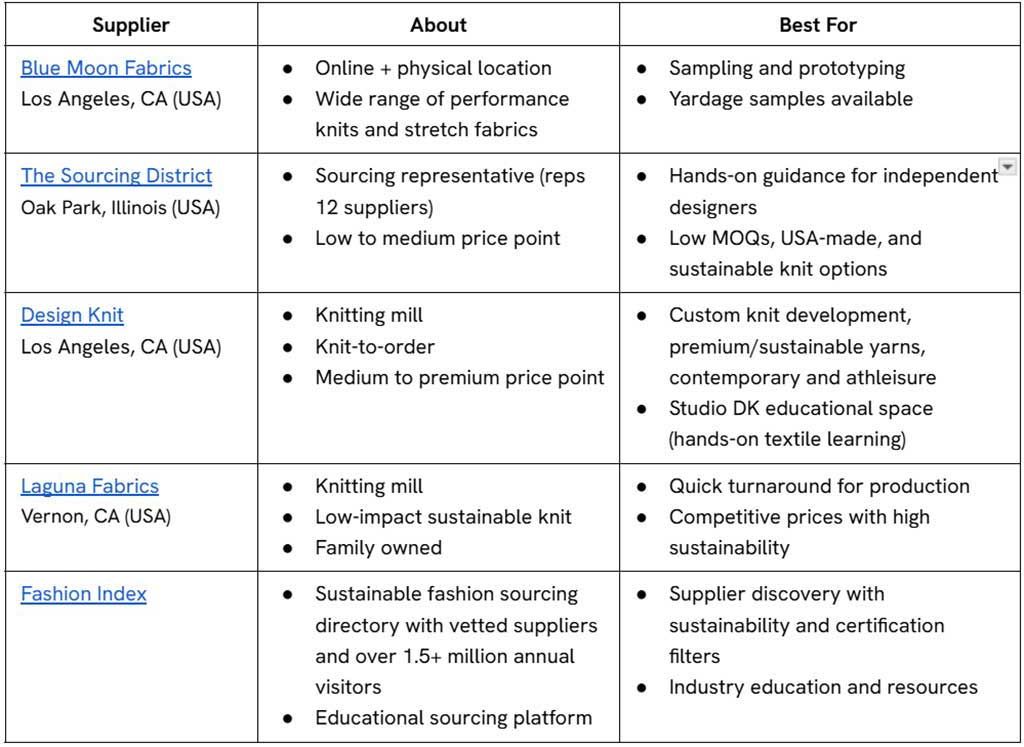
Contact these suppliers, schedule a visit if possible, and ask questions. The right fit depends on your specific needs.
Fashion Index Tip: To search for suppliers on Fashion Index, filter your search by Knit Fabrics
Evaluating Supplier Compatibility and Knit Quality
Quality knit can’t be determined by price, fiber content, or its online appearance alone. The material must be physically evaluated. Knit fabric approval is a technical decision, not just a visual decision.
Questions to ask before sampling:
-
MOQs for sampling vs. production
-
Lead time for stock vs custom
-
Test reports or certifications
-
Reorder capability
Here are some things to keep in mind:
Green Flags: Transparent, willing to send samples, provides documentation, and responsive communication.
Red Flags: Vague information, won’t sample, pushy about bulk ordering, and no reorder capacity.
Whenever possible, visit your supplier's showroom and/or manufacturing facility.
Find verified fabric suppliers on Fashion Index.
Quick DIY testing allows you to examine its recovery, dimensional stability, shrinkage risk, opacity, pilling tendency, torqueing/skewing, and hand feel. We uncover key identifiers of what makes high-quality fabric more in part four of our knit series.
Certifications: What to Look For
We covered certifications in depth in Sustainability Throughout the Supply Chain: Creating a Greener Future in Fashion. Here’s what’s new and what matters specifically for knits:
OEKO-TEX Standard 100 is a globally recognized certification verifying that textiles have been tested for over 1,000 harmful substances. As of 2025, it covers every component, from fabric to threads and buttons, with stricter criteria for products with direct skin contact.
This testing is especially important for knits because they sit close to the body and retain heat. A higher temperature has a higher potential for chemical transfer from the textile to the skin.
A 2025 Textile Exchange Materials Market Report found that only 34% of global cotton production currently comes from certified sources. Learning how to evaluate fabric suppliers includes understanding your company’s need for sustainable and eco-friendly fabrics and processes, including organic farming practices.
Sampling Basics
Sampling is a risk-prevention process. It catches errors—incorrect stretch, unexpected shrinkage, color problems—before they become production waste.
Sample types through the production process
There are several fabric samples you may request depending on your needs and stage in the production process. A swatch or header card is a small piece of the fabric, usually 2–8 inches, sent by a mill or supplier. This helps you verify fabric basics and stock colors. Once the fabric is approved, sample yardage, 1-10 yards, is ordered for testing to confirm the fabric will work as expected for your garment. Finally, pre-production yardage is obtained before bulk manufacturing begins.
Budget your samples by type, including shipping. Swatches tend to be free, but in some cases can be $5-25. Sample yardage is typically 1.5-2 times the cost for bulk fabric per yard, including freight on board (FOB) fees.
For custom colors or prints, additional approvals are required. Two-color submissions are lab dips and strike-offs. Lab dips are samples dyed to match a specific color standard. Strike-offs are sample prints of a fabric design to check colors, pattern repeat, and quality before full production. Never approve bulk orders without seeing lab dips or physical strike-offs.
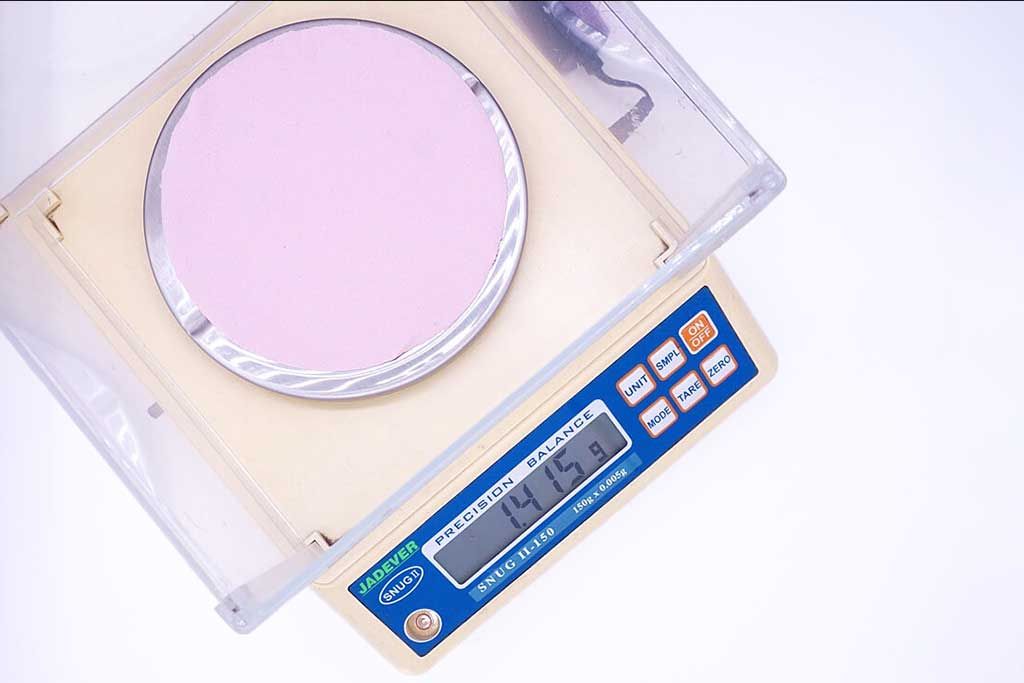
Pay close attention to GSM while sampling. Weight directly affects drape, opacity, seasonality, and durability (heavier weights often provide more resilience). Understanding these variables ensures that the fabric you approve not only looks right—but performs exactly as intended.
Fabric sampling for apparel production is exciting, but patience is essential. Plan 3–6 months, depending on mill location, from first sample to bulk fabric delivery—longer for custom development.
What's Next?
Once you know how to evaluate structure, weight, and supplier capability, you begin to see what’s truly possible. Material selection becomes strategic. You can choose knits that enhance athletic performance, support sustainability goals, improve durability, or elevate comfort in measurable ways.
Part 3 of this series moves into that expanded landscape—exploring what happens when material knowledge turns into material advantage. From advanced performance knits to sustainable fiber innovations and emerging textile technologies, we’ll look at how the next generation of knit fabrics is redefining what apparel can do.
FAQ
What's the difference between greige and finished knit fabric?
Greige fabric is knit but untreated, meaning it hasn't been dyed, printed, or finished yet. Finished fabric has gone through dyeing, printing, and any performance treatments, so it's ready for cutting and sewing. Brands sourcing custom colors or finishes typically start from greige goods to reduce lead times.
What's the difference between a lab dip and a strike-off?
A lab dip is a small fabric swatch dyed to test a specific solid color match under controlled lighting conditions. A strike-off is a small-scale physical sample of a printed design used to check pattern accuracy, colorways, scale, and registration before bulk printing. Both are mandatory checkpoints to approve before production, not after.
What are typical MOQs for knit fabric sampling vs. bulk production?
In-stock sample yardage is usually available in small quantities from 1 to 5 yards. However, custom sample runs often require a 50 to 100-yard minimum or a sample surcharge fee. For bulk production, custom knit MOQs typically range from 300 to 500 kilograms (approximately 1,000 to 1,500 yards) per color or print.
What does OEKO-TEX Standard 100 certification mean for knit fabric?
OEKO-TEX Standard 100 certifies that every component of the textile has been tested for hundreds of regulated harmful substances and is safe for human health. For brands sourcing knit fabric, it verifies chemical safety and toxicity limits but does not track environmental impact or organic origins like organic certifications do.
How long does knit fabric sampling take before bulk production?
Developing and approving lab dips or strike-offs typically takes 2 to 3 weeks per round, while knitting custom sample yardage takes an additional 4 to 6 weeks. Brands should build 6 to 8 total weeks for sampling into their calendar to account for common color or pattern revisions before bulk production begins.
Download Fabric Supplier Checklist—your step-by-step guide from first contact to production approval.
Related articles:
Knits: Part 1—Why Fabric Construction Comes Before Design
Knits: Part 3—Innovation: Reimagining What a Knit Can Be
Knits: Part 4—Evaluating Knit Fabric Performance: From Feel to Proof
Getting Started
For readers in the early planning stages:
I have a great idea for a fashion product – how do I start?
Essential Tips for Small Fashion Business Success
Go from Fashion Influencer to Fashion Entrepreneur using Fashion Index
What Is Adaptive Fashion? A Complete Guide to Inclusive Design
Apparelmark: Turning Fashion Ideas into Market-Ready Brands with Full-Service Design
Before You Source
For readers preparing to contact suppliers:
Are You Ready to Get a Sample Made?
11 Common Mistakes in Starting a Fashion Business
Lowering Costs For Start-Up Fashion Brands
How to Write a Sourcing Inquiry That Gets a Response
Understanding Knit Fabric Series
How to Start a Fashion Brand: An Essential Guide For Founders
Technical Knowledge
For readers building their production fluency:
A Beginner's Guide to Stitch Types
Thread Characteristics: From Fibers to Finishes
Plant-Based Leather Alternatives
Comments
Loading comments…