✦The Sourcing Brief spotlight to 218k+ subscribers
Knits: Part 4—Evaluating Knit Fabric Performance: From Feel to Proof
From Selection to Validation
You've sourced your fabric. You've reviewed swatches, requested sample yardage, and made your selection. Now comes the step that separates designers who hope their garment performs from those who know it will.
This is the fabric testing phase—and it begins before a single pattern piece is cut.
Testing is not one moment in the development process. It happens in layers, at each stage of pre-production, and each round of testing asks different questions. At the development and sourcing stage, you're confirming that the fabric's core properties match the spec. During design and prototyping, you're evaluating how the fabric behaves in a real garment on a real body. At pre-production, you're stress-testing the fabric against the conditions it will face after purchase. Understanding where you are in that continuum determines what you test—and what a failure actually means.
Why Visual Approval Is Not Enough
In early-stage development, fabrics are often approved based on immediate sensory qualities: color, stretch, and overall appearance in a swatch or prototype. While these are important, they are incomplete.
Knit fabrics, by nature, are dynamic structures. Their looped construction allows them to stretch, recover, shift, and respond to stress over time. This is what makes them comfortable and adaptable—but it also means their performance cannot be fully understood in a static state.
Most knit-related failures don’t appear until later—after repeated wear, laundering, and movement, or when production is scaled, and consistency becomes critical. Common issues include loss of shape due to poor recovery, shrinkage after washing, torque (where the fabric twists and distorts), sheerness under tension, surface pilling, and colorfastness.
What this reveals is simple: fabric approval cannot be based on appearance alone. At this stage, evaluating knit fabrics becomes a technical decision as much as a creative one.
What to Test: Core Knit Performance Properties
Testing knit fabric is not a single event. It is a phased process, and knowing what to test at each stage is as important as knowing how.
The Tests
GSM influences drape, opacity, durability, and seasonality. A lightweight 120 GSM jersey may feel fluid and breathable, but can lack coverage or long-term resilience. A heavier 200 GSM knit offers more structure and opacity, but may change the way a garment sits on the body.
Stretch must be considered alongside recovery. A fabric that stretches easily but fails to return to its original dimensions will gradually lose its shape. Over time, this leads to bagging at stress points like knees and elbows, compromising both fit and lifespan. In performance categories such as activewear, high stretch—often 50% or more—must be paired with strong recovery to maintain function.
Dimensional stability and shrinkage are best understood after laundering. These properties determine whether a fabric maintains its size and proportion, directly affecting pattern accuracy and size consistency in production. Even minimal shrinkage can create noticeable differences across garments, leading to returns and customer dissatisfaction.
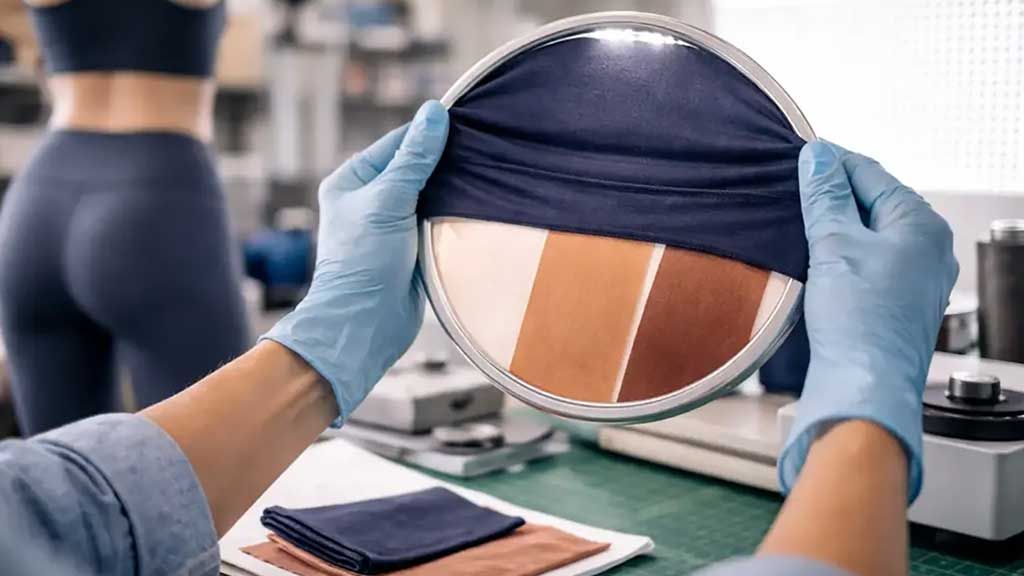
Opacity is critical in fitted or light-colored garments. A knit that appears opaque when relaxed can become transparent under tension. Testing for opacity under stretch is essential, especially in categories like leggings or body-contouring silhouettes.
Pilling resistance evaluates surface durability. Over time, friction causes fibers to loosen and form small balls on the fabric surface, which can quickly degrade the perceived quality of a garment. Similarly, torque—or skewing—can occur when yarns within the knit are imbalanced, causing the fabric to twist after washing. This often results in side seams shifting and garments hanging incorrectly.
Handfeel extends beyond softness to include how the fabric behaves against the skin over time, how it responds to wear, and whether it maintains its intended sensory qualities. Hand feel is evaluated subjectively throughout development rather than through a single test.
Finally, colorfastness determines how well a fabric retains its color when exposed to washing, rubbing, light, and perspiration. Without adequate dye stability, even well-constructed garments can fade, bleed, or appear worn prematurely.
Understanding Lab Rating Scales
Several knit performance tests use standardized 1-5 rating scales, where 5 indicates no change, and 1 indicates severe degradation. Pilling resistance and colorfastness both use this system, and most brands require a minimum rating of 4 for production approval. Shrinkage and recovery are measured in percentages—thresholds vary by garment category, but general apparel typically requires less than 5% shrinkage and at least 90% recovery. Performance or fitted garments often have tighter tolerances.
Timing Your Tests
Fabric evaluation should not be treated as a single checkpoint. It is an ongoing process that evolves alongside development.
At the swatch stage, evaluation is primarily visual and tactile, supported by basic measurements like GSM and initial stretch assessment. As sample yardage becomes available, more structured testing—including stretch and recovery, wash performance, opacity, pilling, torque, and colorfastness—should be conducted on test cards.
By the pre-production stage, critical properties should be verified through laboratory testing for fabrics being used in bulk.
Even during production and reorders, evaluation continues. Spot-checking incoming materials ensures consistency with previously approved standards.
At every stage, the goal remains the same: to reduce uncertainty and increase control.
How to Test: In-House Methods
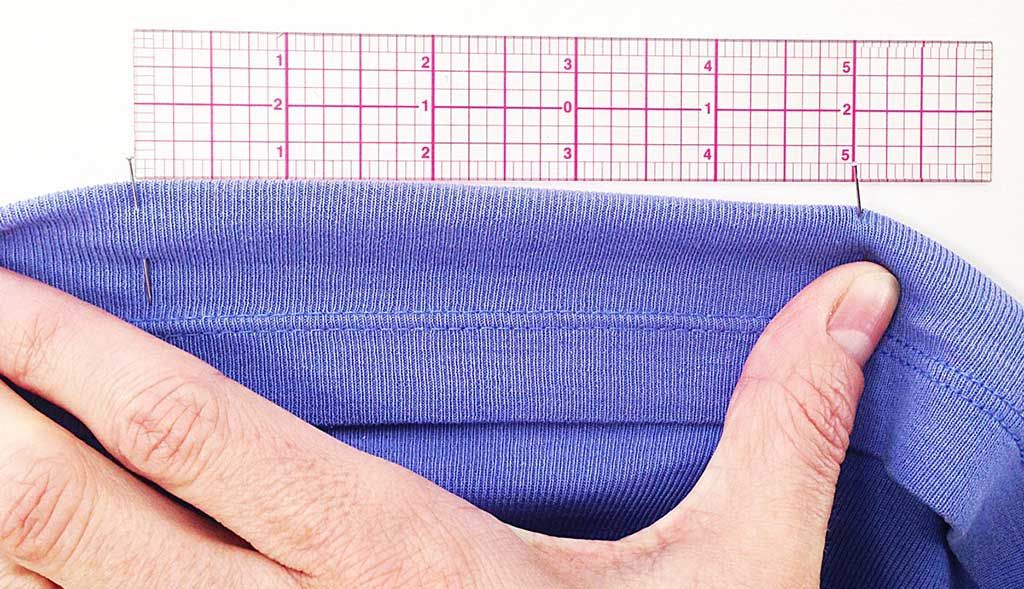
Before investing in lab testing, designers can conduct controlled in-house tests using simple tools. This is where fabric test cards become essential.
What Is a Fabric Test Card?
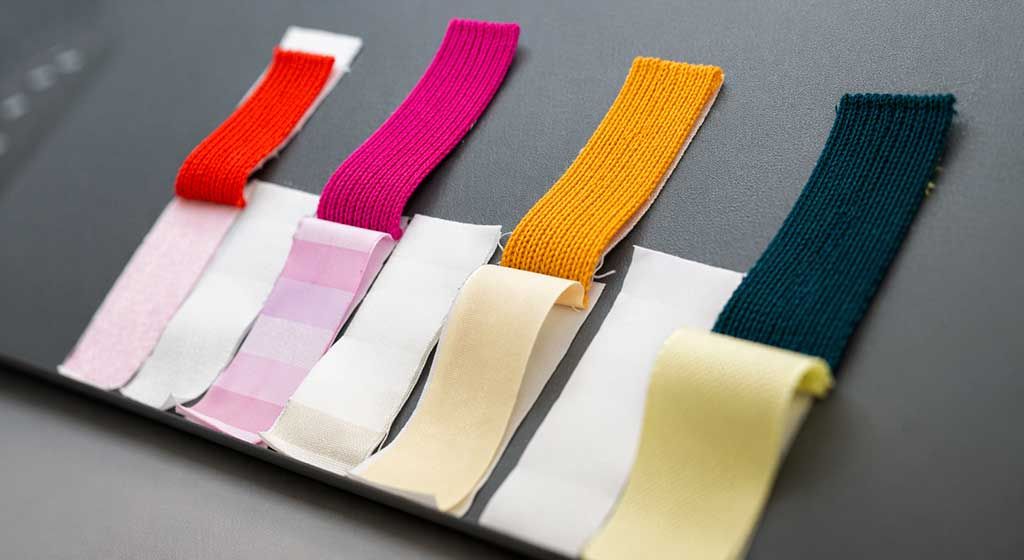
A fabric test card is a standardized sample system used to track performance across different tests.
Each card includes:
-
Fabric swatch
-
Test type
-
Date
-
Observations
-
Pass / Fail result
If possible, test 2–3 samples of the same fabric. Knit fabrics can vary between lots and colorways, and consistency matters for production.
Pro Tip: Testing multiple colorways or lots of the same fabric is ideal, but often impractical due to the cost. Most brands test multiple colorways in-house for fabric weight, but only one representative sample per fabric for other tests, and rely on suppliers for consistency for additional colorways.
Creating Pass/Fail Criteria
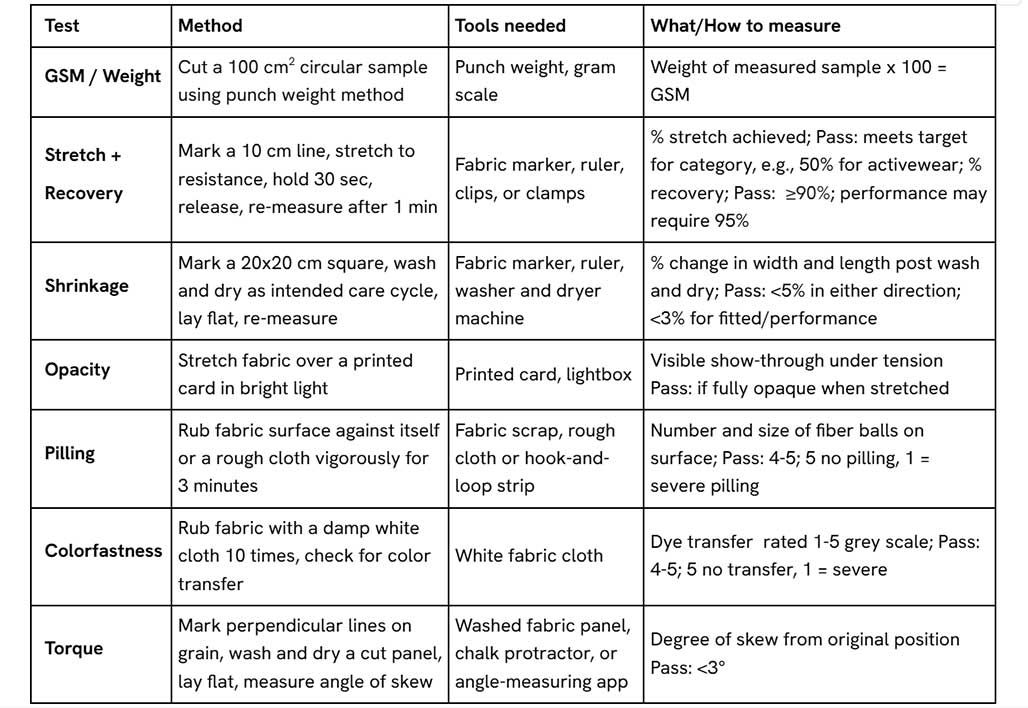
Testing without benchmarks is just observation. To make testing useful, you need clear criteria for approval.
Establishing pass/fail criteria allows designers to compare fabrics objectively and communicate expectations clearly with suppliers. For example, a fabric may be approved if it returns to at least 90% of its original shape after stretching, or if shrinkage remains below 5% after washing. These thresholds create consistency, reduce ambiguity, and help prevent costly errors during production.
More importantly, they shift the designer's role. Instead of selecting fabrics based on preference, you begin selecting based on performance.
Download: In-House Fabric Testing Methods and Log Card—includes printable test card, test methods, and pass/fail benchmarks.
When to Use a Lab (and When Not To)
As development progresses, there is a point where internal testing must be supplemented with certified data.
Use a Lab When:
-
Entering bulk production
-
Working with high-cost fabrics
-
Selling through retailers with compliance requirements
-
Developing performance or technical garments
-
Needing official documentation (shrinkage, colorfastness, etc.)
Pro Tip: Think of in-house testing as screening and lab testing as final validation. The cost of testing is always lower than the cost of failure in production.
Third-party laboratories provide standardized, repeatable results using established methods such as American Association of Textile Chemists and Colorists (AATCC) and American Society for Testing and Materials (ASTM) protocols. AATCC focuses on dyeing, chemical finishing, and colorfastness, while ASTM Committee D13 specializes in physical, structural, and mechanical properties. These protocols ensure consistency in product quality.
Industry-standard test protocols for knit fabrics
-
Colorfastness (wash, light, rubbing): AATCC 61, AATCC 16
-
Tensile strength: ASTM D5034
-
Pilling resistance (Martindale test): ASTM D4970
-
Shrinkage (standardized wash protocols): AATCC 135
-
Torquing/Skewness: AATCC 179
Download: Lab Testing Fabric Request Form
Cost and Timeline
In practical terms, lab testing is more accessible than many emerging designers expect. Individual tests typically range from $50 to $150 per property, depending on the lab and complexity. A standard test panel—covering shrinkage, colorfastness, and pilling—generally falls between $300 and $500. Turnaround times are usually one to three weeks, though this can vary based on lab capacity and whether expedited services are requested.
Sample Size for Lab Testing
Labs require minimum yardage based on requested tests—typically ½ - 1 yard. Testing multiple colorways or lots of the same fabric is ideal, but often impractical due to cost. Most brands test one representative sample per fabric and rely on supplier consistency for additional colorways.
How and Where to Request Testing
When contacting a lab, request specific test standards (e.g., AATCC 135 for shrinkage, ASTM D4970 for pilling). This ensured your results are comparable across suppliers and reproducible for future orders. Labs like Hohenstein, Bureau Veritas, SGS, and Intertek offer textile testing services.
From Knowledge to Control
Throughout this series, the process has built progressively—from understanding knit construction, to sourcing materials, to applying them strategically. Evaluation is the final step in that progression.
It is where assumptions are tested, decisions are confirmed, and outcomes are shaped before a single garment is cut.
The success of a garment is not determined at the moment it is designed. It is determined later—when it is worn, washed, and experienced over time. And that outcome is decided here, in how you evaluate your fabric before production begins.
Download: Knit Fabric Test Card System
-
Printable In-House Fabric Testing Methods, Pass/Fail Benchmark Guide, and Log Card
FAQ
What's a passing shrinkage and recovery rate for knit fabric?
For general apparel, standard single-knit jerseys are held to a maximum of ±5% dimensional change under AATCC TM135 laundering standards. High-stability double-knits (like interlock) require a stricter tolerance of ±3%. For elastomeric (spandex) performance fabrics, acceptable recovery must hit at least 95% within 30 minutes of tension release to prevent bagging.
When should I send fabric to a lab instead of testing in-house?
Third-party lab testing is necessary when transitioning to bulk production, utilizing high-cost technical fibers, or entering retail markets with strict regulatory compliance standards. Certified lab reports are mandatory for validating legal compliance, developing performance or technical garments, or when you need official documentation like certified shrinkage or colorfastness results.
How much does lab fabric testing cost?
Individual property assessments generally cost $50 to $150. A comprehensive standard physical and chemical performance panel covering shrinkage, pilling, bursting strength, and colorfastness typically runs between $350 and $600 per fabric, with a standard turnaround time of 5 to 7 business days.
What AATCC and ASTM standards apply to knit fabric testing?
Colorfastness uses AATCC 61 (laundering) and AATCC 16 (light fastness), tensile strength uses ASTM D5034, abrasion and pilling resistance (Martindale) uses ASTM D4970, dimensional stability, shrinkage and torquing, uses AATCC 135 (laundering) and AATCC 179 (skewing), and torque/skewness uses AATCC 179.
Related Articles:
Knits: Part 1—Why Fabric Construction Comes Before Design
Knits: Part 2—How to Source Quality Knit Fabric
Knits: Part 3—Innovation: Reimagining What a Knit Can Be
Getting Started
For readers in the early planning stages:
I have a great idea for a fashion product – how do I start?
Essential Tips for Small Fashion Business Success
Go from Fashion Influencer to Fashion Entrepreneur using Fashion Index
What Is Adaptive Fashion? A Complete Guide to Inclusive Design
Apparelmark: Turning Fashion Ideas into Market-Ready Brands with Full-Service Design
Before You Source
For readers preparing to contact suppliers:
Are You Ready to Get a Sample Made?
11 Common Mistakes in Starting a Fashion Business
Lowering Costs For Start-Up Fashion Brands
How to Write a Sourcing Inquiry That Gets a Response
Understanding Knit Fabric Series
How to Start a Fashion Brand: An Essential Guide For Founders
Technical Knowledge
For readers building their production fluency:
A Beginner's Guide to Stitch Types
Thread Characteristics: From Fibers to Finishes
Plant-Based Leather Alternatives

Comments
Loading comments…