✦The Sourcing Brief spotlight to 218k+ subscribers
Fashion Resale Is a $350B Opportunity: Do You Have A Strategy?
The fashion resale market is projected to be a $350B industry by 2028. It didn't build slowly. It scaled faster than most brands’ response time.
The growth projection isn't a forecast to file away—it's a signal that resale belongs in your strategy, not on the sidelines. Resale channels selling secondhand items are growing 3 times faster than the broader fashion market. This now accounts for 10–12% of global apparel sales. U.S. online resale alone is forecast to hit $34B by 2027, at 16% annual growth.
The question isn't whether resale matters. It's whether you have a strategy for it.
From Thrift to Strategic Channel
Fashion resale used to mean thrift stores and eBay listings—something consumers did quietly, not something brands acknowledged. That’s changed.
The shift from secondhand as consumer behavior to resale as a brand strategy happened in less than a decade. Digital platforms professionalized the experience—authentication, curated collections, seamless transactions. Mobile-first shopping made resale accessible and convenient. Sustainability became a purchasing driver, especially for Gen Z and Millennials. And economic pressure pushed consumers toward value without sacrificing quality or brand.
The inflection points came in quick succession. ThredUp and Poshmark scaled the consignment model online. The RealReal brought authentication and luxury credibility to secondhand. Depop captured Gen Z with a social-first, peer-to-peer approach. Vestiaire Collective repositioned resale as aspirational—not discount.
Resale is no longer just getting rid of your secondhand items. It's second-chance fashion with first-class infrastructure. The numbers tell the story: the American resale of secondhand garments reached $55.5B in 2025, accounting for 12% of spend on clothing, footwear, and accessories. Globally, the resale market is growing at 10% per year, analysts expect it to climb from roughly $210–$220 billion today to as much as $350 billion by 2028. This isn’t niche behavior anymore—it’s mainstream.
The Platforms Driving It—And Who They Attract
Each platform serves a distinct buyer. Understanding the landscape matters for brands watching where their products end up—and who's buying them.
-
ThredUp: Globally, a mass market, value-driven, Gen X and millennial women; high volume, accessible price point
-
Depop: Gen Z, trend-led, global streetwear and vintage; social-first, European and American community-driven discovery
-
Vestiaire Collective: European luxury buyer, authentication-focused, investment-minded
-
The RealReal: U.S. luxury consignment, white-glove authentication, high-AOV transactions
The platforms aren't really competing with each other. They're each pulling a different segment away from traditional retail—and doing it effectively.
Luxury's U-Turn
For years, luxury houses treated fashion resale as a threat to be contained. The concerns were legitimate: brand dilution, counterfeit risk, loss of narrative control over how their products lived in the world.
What they didn't anticipate was that consumer demand wouldn't wait for permission. Resale of luxury goods scaled regardless of whether brands participated—and third-party platforms began capturing their customers, their data, and their margins.
The shift happened quietly. Brands began partnering with authenticated platforms rather than fighting volume they couldn't control. And in doing so, they discovered something counterintuitive: platforms like The RealReal protect brand integrity better than unregulated grey markets ever could. Authentication infrastructure, curated presentation, and category expertise all reinforce the perceived value of the product—not erode it.
Fashion resale also became an increasingly powerful sustainability story. Extending a product's lifecycle is, by definition, a circular economy play. Brands that once resisted resale on brand-protection grounds began recognizing it as a values-aligned channel.
What this signals for the broader market: if luxury moved, no segment is exempt from rethinking its position.
Strategic question for brands: If your product is already circulating on resale platforms, would you rather control that narrative—or let someone else define it?
The Wholesale Problem
When a consumer can find last season's version of your product for 40–60% less, it changes the math on new retail pricing.
This is showing up at the floor level. Retail velocity slows when resale inventory is abundant. Markdown pressure increases as full-price products compete with accessible secondhand alternatives. Consumer price anchoring shifts downward—once a buyer knows how your product is valued on the secondary market, that number lives in their head when they're standing at your retail shelf.
The brands feeling this most acutely are those with high resale supply and commoditized product—where style, not brand identity, was the primary purchase driver. When that style is widely available secondhand, the urgency to buy new evaporates.
Strategic question for brands: If your customer can get your product for 60% less somewhere else, what are you actually selling them on?
Resale as an Owned Channel
The brands winning in resale aren't passively watching platforms profit from their products. They're building their own channels—and capturing revenue, customer data, and brand narrative in the process.
Lululemon "Like New" runs trade-in across 390+ U.S. stores, with resale inventory sold at likenew.lululemon.com. The mechanics are designed to keep customers inside the Lululemon ecosystem—rather than losing them to third-party platforms.
Patagonia "Worn Wear" proved brand-led resale could work at scale. Patagonia repairs, resells, and recycles its own products—not as a sustainability add-on, but as an expression of core brand identity.
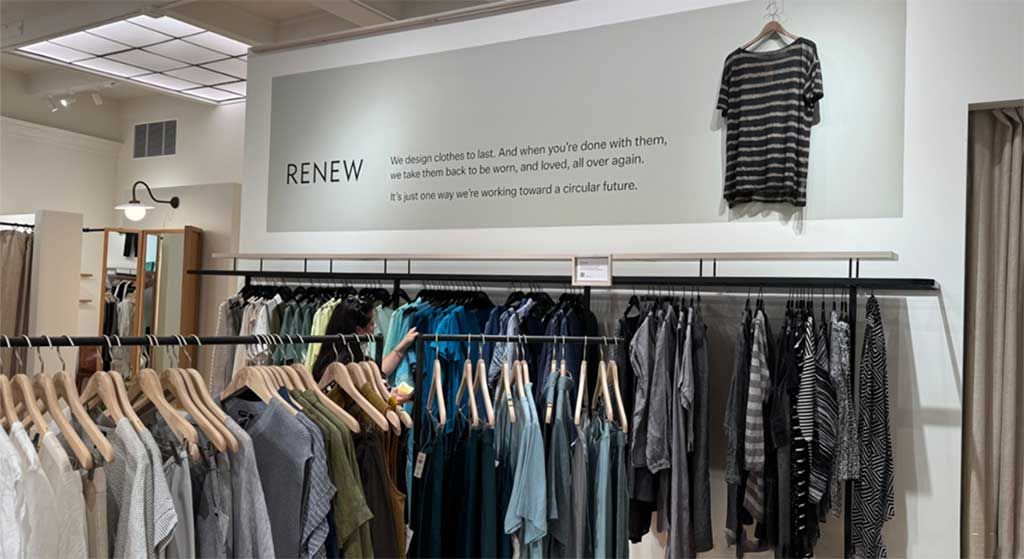
Eileen Fisher "Renew" operates a take-back program that resells or repurposes used garments. Circularity is woven into the brand narrative rather than bolted on. For Eileen Fisher, resale isn't a channel. It's a value statement that happens to generate revenue.
Levi's "SecondHand" offers curated vintage and pre-owned denim, tapping into heritage while extending the life of a product that already carries cultural weight. Vintage Levi's carries cachet—the brand is smart to own that story.
Arc'teryx "Used Gear" runs a trade-in program for performance outerwear. The quality positioning that defines Arc'teryx at retail is reinforced through the resale experience. A product that holds its value and trades well says something about how it was made.
What these programs share is worth paying attention to. The brand controls authentication and quality standards—how the product is presented in its second life reflects directly on the brand. The customer stays in the ecosystem, meaning data, loyalty, and repeat purchase behavior remain intact rather than migrating to a third party. Revenue is captured instead of ceded to platforms profiting from your product without your involvement. The sustainability narrative is reinforced authentically—not as a press release, but as an operational reality.
Strategic question for brands: If you're not offering a resale channel, who is selling your products secondhand—and are they representing your brand the way you would?
Cannibalization vs. Acquisition
Every brand asks the same question: Is resale stealing my full-price sales?
It's the right question—but most are answering it with assumptions, not data.
For many brands, resale functions as a customer acquisition channel, not cannibalization. Buyers who discover a brand through a resale often convert to full-price retail customers. Trade-in programs bring customers back into stores. Younger consumers who can't afford your product at full price use resale as an on-ramp—and some become your best retail customers in five years.
Fashion resale participation also signals sustainability values, which attracts a growing segment of values-aligned consumers who are specifically seeking brands that take circularity seriously.
The data supports this. Resale buyers report high satisfaction and strong repeat purchase intent. Brands with owned resale programs have seen increased engagement—not decreased full-price sales. The RealReal has reported that many first-time luxury buyers enter through resale before making the move to new retail.
The nuance matters here. Cannibalization risk is real for commoditized products with high resale supply. But it's a different story for brands with strong identity, distinctive product, and controlled resale channels. The risk isn't resale channels themselves—it's having undifferentiated products in an oversaturated secondhand resale market.
Resale Is a Channel, Not a Threat
Resale isn't a future disruption. It's current infrastructure—already shaping how consumers think about price, value, and loyalty.
The brands ahead of this are treating resale with strategy and intentionality. They've built programs, captured customers, and turned what could have been a margin leak into a loyalty engine and a sustainability story.
The brands behind it are watching someone else profit from their products and their customers—without their involvement, their data, or their narrative control.
Fashion resale isn't a trend to wait out or a threat to monitor from a distance. It's a channel. And the brands treating it that way are already ahead.
How is your brand thinking about resale—threat or opportunity?
Related Articles:
Are Trends Not Trending? Fashion in the Age of Overchoice
Getting Started
For readers in the early planning stages:
I have a great idea for a fashion product – how do I start?
Essential Tips for Small Fashion Business Success
Go from Fashion Influencer to Fashion Entrepreneur using Fashion Index
What Is Adaptive Fashion? A Complete Guide to Inclusive Design
Apparelmark: Turning Fashion Ideas into Market-Ready Brands with Full-Service Design
Before You Source
For readers preparing to contact suppliers:
Are You Ready to Get a Sample Made?
11 Common Mistakes in Starting a Fashion Business
Lowering Costs For Start-Up Fashion Brands
How to Write a Sourcing Inquiry That Gets a Response
Understanding Knit Fabric Series
How to Start a Fashion Brand: An Essential Guide For Founders
Technical Knowledge
For readers building their production fluency:
A Beginner's Guide to Stitch Types
Thread Characteristics: From Fibers to Finishes
Plant-Based Leather Alternatives
Comments
Loading comments…