✦The Sourcing Brief spotlight to 218k+ subscribers
Size Consistency and Size Grading Explained
Size grading is the process of expanding an approved base-size pattern into a full size range using grade rules, while size consistency is the ongoing practice of keeping measurements and fit predictable across a brand's entire product line.
Once the fit of a base-size garment is approved, size grading expands a pattern into a complete size range. Using grade rules applied at point of measurements (POMs), the dimension at that location increases or decreases proportionally across sizes, while the garment preserves its intended proportions, balance, and silhouette. Because every area of the body changes differently, grading cannot rely on one uniform adjustment. When grade rules do not reflect how body proportions change across the intended size range, fit problems can become increasingly noticeable in outer sizes.
Understanding Size Consistency
Size consistency means maintaining dependable measurements, proportions, and fit expectations throughout a brand’s products. When customers find a garment that fits well, they often use that purchase as a reference when selecting other items from the brand. If a customer wears a medium in one collection but unexpectedly needs a small or large in another, the inconsistency erodes confidence in the brand’s sizing.
Reliable sizing strengthens customer satisfaction, encourages repeat purchases, and reduces fit-related returns. It’s especially important in online shopping, where customers cannot try on garments before buying. Over time, a predictable fit becomes part of a brand’s identity and a driver of customer loyalty.
Size consistency doesn’t mean every garment with the same size label should have identical measurements. A fitted blazer, oversized shirt, and stretch-knit dress require different dimensions because their silhouettes, materials, and functions differ. Each garment should still reflect the brand’s established fit expectations while delivering the appearance, comfort, and range of motion that standard represents.
Why Sizing Varies Between Brands
No universal apparel sizing system exists across the industry. Each company develops standards based on its target customer, fit philosophy, body-data sources, product categories, and market positioning. Brand designing for juniors sizing may use different body proportions than one serving a missy customer, even when both garments carry the same size label.
Brands may also interpret fit categories such as slim, regular, relaxed, and oversized differently. One company may prioritize a close fit through the waist, while another builds in additional ease. Fabric stretch, garment construction, price point, and product function further influence how a size is developed.
Vanity sizing adds another layer of variation by assigning smaller sizes to garments with measurements comparable to larger sizes elsewhere. A size label only reflects where a garment falls within one brand’s system, not a fixed body measurement, so the same number can mean different things from one brand to the next. What matters more than the label itself is whether the brand’s sizing stays consistent every time a customer buys it.
Establishing Measurement Specifications
Size consistency begins with clearly defined measurement specifications. Brands build these standards from their target customer, fit model, base-size pattern, body-measurement data, and intended fit. Together, these elements determine how the garment should relate to the customer’s body.
Technical designers identify POMs, the specific locations measured consistently across every sample and size. Depending on the garment, these may include the chest, waist, hip, shoulder width, sleeve length, inseam, rise, armhole depth, and garment length. Each point requires a precise measuring method so the brand and manufacturer evaluate samples the same way.
Technical designers record these measurements in graded specification sheets in a tech pack and share with the manufacturer. Approved specifications become an objective reference for evaluating samples, controlling production, and developing future styles. Maintaining these standards across seasonal collections supports fit consistency even as fabrics, colors, and design details change.

Tolerance Standards and Acceptable Variations
Tolerance is the amount a finished garment may vary from its specified measurement while remaining acceptable. For example, if a chest measurement is 40 inches with a tolerance of plus or minus half an inch, measurements between 39 ½ and 40 ½ inches may be approved if the variation doesn’t negatively affect fit.
Small differences occur because of fabric behavior, cutting, sewing, pressing, washing, and finishing. Stretch fabrics may relax after construction, natural fibers may shrink during laundering, and fabric layers may shift slightly during cutting. Tolerance standards account for these realistic production conditions.
Tolerances should reflect the measurement area, fabric properties, construction method, and effect on fit. A slight variation in a decorative detail may matter far less than the same variation at the waist, neckline, or armhole. Critical fit areas require tighter control.
Excessively wide tolerances can make sizing unreliable. They should account for reasonable manufacturing variation without excusing inaccurate patterns, careless construction, or poor quality control. If an accepted difference noticeably changes the garment’s comfort or appearance, the tolerance is likely too generous.
What Is Size Grading?
Size grading is the systematic process of increasing or decreasing a base-size pattern to create additional sizes. It changes the pattern’s dimensions without redesigning the garment or altering its intended silhouette.
During grading, selected pattern points move horizontally, vertically, or in both directions. A bodice may expand at the bust and waist while gaining controlled length. A sleeve may increase at the bicep, adjust around the sleeve cap, and lengthen by a different amount. These combined alterations create a new size while preserving the relationship between corresponding pattern pieces.
Grading is different from fitting. Fitting determines whether the base-size garment provides the intended shape, balance, comfort, and movement. Grading uses that approved pattern to develop the remaining sizes. If the base size contains an unresolved fit problem, grading can repeat or intensify it across the range.
Pro Tip: Every graded pattern is built from a zero point, sometimes called a stack point. This fixed reference receives no grading movement. Other pattern points shift a defined distance from the anchor, keeping patterns aligned and allowing grade rules to move consistently in the correct direction and amount.
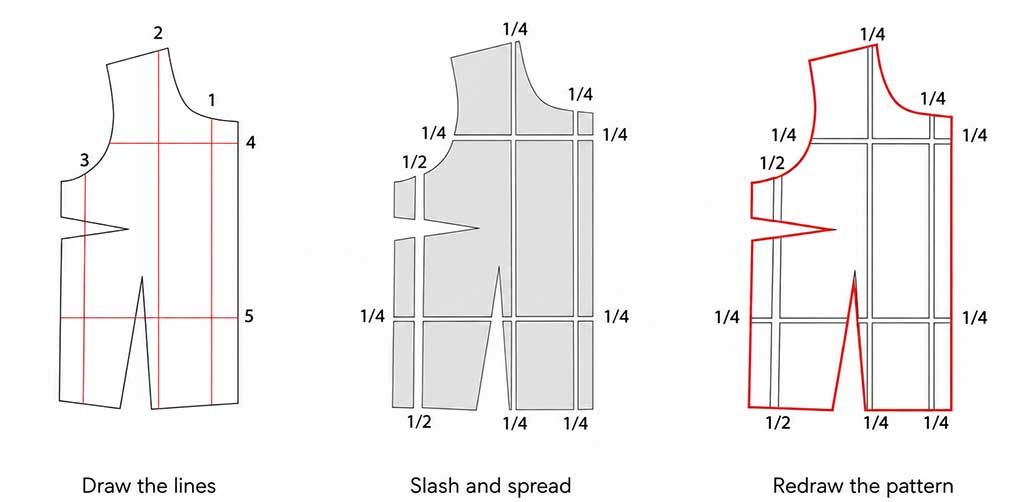
How Grade Rules Preserve Garment Proportions
Grade rules are predetermined increments that control how much each pattern point changes between sizes. Brands often think of grading as a single measurement difference between adjacent sizes, but the body doesn’t increase the same amount in every area.
The bust, waist, hip, shoulder, neckline, armhole, sleeve, and garment length may each require different increments. A larger chest measurement doesn’t automatically require an equal increase in shoulder width or neckline size. Applying the same amount everywhere can distort the pattern and create poor garment balance.
Pro Tip: Small grading errors may not be obvious between two adjacent sizes. However, as the grade is repeated across the full size range, those differences accumulate and can create noticeable proportion and balance issues in the smallest and largest sizes.
Testing representative sizes, sometimes called jump sizes, helps identify these problems before production. Reviewing nested patterns, comparing graded patterns with measurement specifications, and fit-testing multiple sizes help detect these errors. Correcting them before production improves fit consistency, customer satisfaction, and return rates.
Product type and silhouette also influence grade rules. A fitted woven jacket requires controlled changes through the shoulder, armhole, and sleeve. An oversized knit top may allow broader increments because its silhouette already includes design ease. Pants require careful adjustments at the waist, hip, rise, thigh, knee, and inseam.
Proportional grading helps preserve shape, design lines, balance, and functionality. Seams stay correctly positioned, pockets stay proportional, and openings remain comfortable. The goal is for every size to reflect the same design intent, not a distorted version of the base pattern.
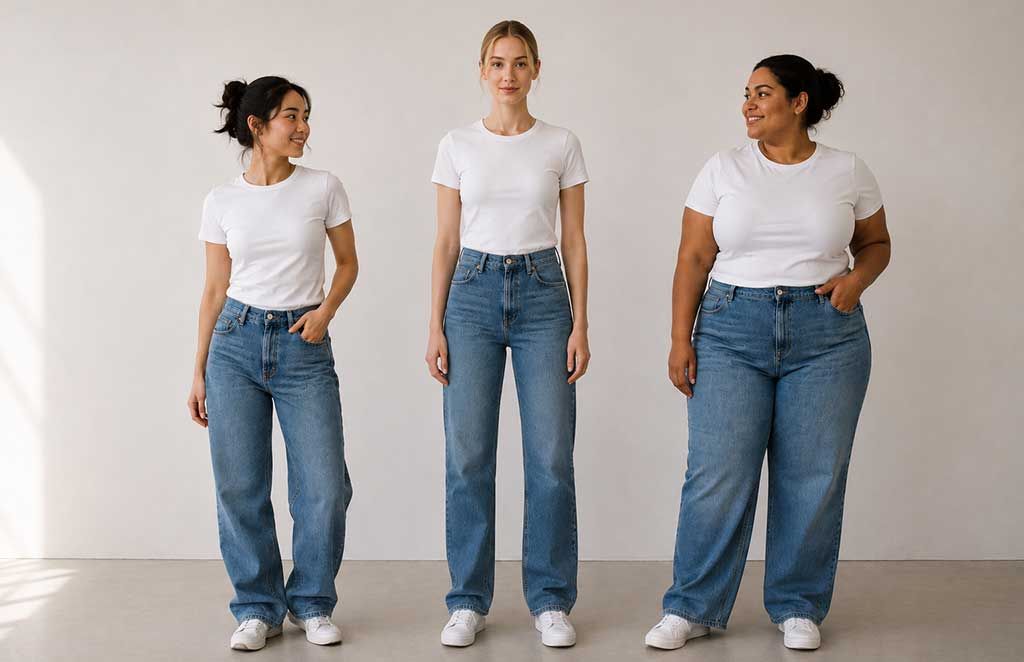
Petite, Tall, and Plus-Size Grading
Petite and tall sizing require more than shortening or lengthening hems. Height differences affect torso length, sleeve length, rise, knee placement, armhole depth, and waist position. Ignore those balance points, and a garment can have the correct overall length while still fitting incorrectly.
Shortening standard pants only at the hem, for example, may leave the knee shaping too low and the rise too long for a petite customer. Adding length only at the hem for a tall customer creates the opposite problem. Adjustments need to be distributed across the whole pattern according to the proportions each size category actually represents.
Plus-size grading may require separate pattern blocks, fit models, body data, and grade rules. Body shape and weight distribution do not necessarily progress according to standard-size proportions. The bust, abdomen, hip, upper arm, thigh, and back often need specialized development.
Extending one grading formula across every category can produce narrow sleeves, misshapen armholes, incorrect rises, and poor garment balance. Each range deserves its own fit testing and technical development based on customers expected to wear it.
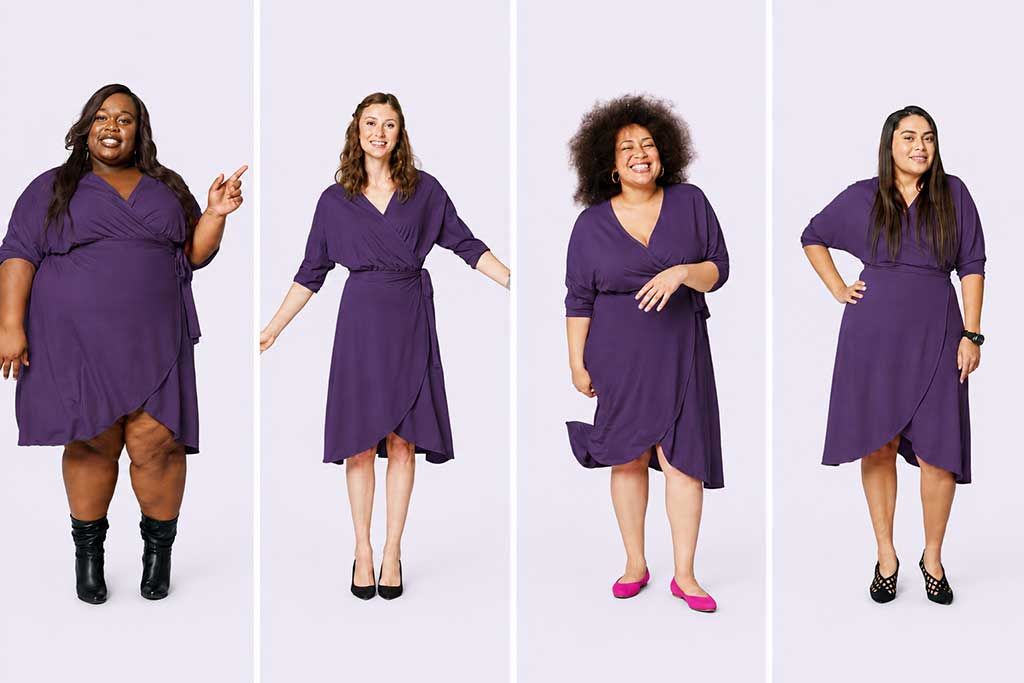
Offering more size labels does not automatically create an inclusive product. A broader range only improves inclusivity when every size receives the same level of technical development and fit consideration.
Maintaining Size Consistency Over Time
Size consistency should be treated as an ongoing quality-control system, not a one-time development decision. Customer feedback, return reasons, fit evaluations, and production measurements all reveal where specifications or grade rules no longer represent the brand’s customer.
Changes in suppliers, fabrics, construction methods, or manufacturing locations can affect fit even when the original pattern remains unchanged. Brands should regularly compare finished garments with approved specifications and investigate repeated measurement variations.
Treating measurement specifications, tolerance standards, and grade rules as connected parts of apparel product development, brands can deliver more dependable sizing across products and seasons. The result is not only a better-fitting garment but also a stronger relationship with the customers who rely on that consistency.
Coming Up Next
Continue exploring garment fit development in the next article in this series, Ease, Movement, and Solving Common Garment Fit Problems, which explains how wearing ease, design ease, fabric behavior, and garment construction influence comfort and mobility. We also examine how brands identify and correct common fit issues before production.
What is one thing that you have learned about grading that you wish you knew years ago?
FAQ
What is the difference between size grading and size consistency?
Size grading is the technical process of expanding an approved base-size pattern into a full range of sizes using grade rules. Size consistency is the broader, ongoing practice of keeping measurements, proportions, and fit expectations dependable across a brand's entire product line, season after season.
What are grade rules in apparel manufacturing?
Grade rules are predetermined increments that control how much each point of measurement changes between adjacent sizes. Because the bust, waist, hip, shoulder, and other areas of the body don't grow at the same rate, grade rules assign a different increment to each measurement point rather than applying one uniform amount across the whole pattern.
What is a tolerance in garment measurements?
Tolerance is the amount a finished garment is allowed to vary from its specified measurement while still being considered acceptable. A plus or minus half-inch tolerance on a 40-inch chest measurement, for example, allows finished garments between 39 ½ and 40 ½ inches to pass approval, accounting for normal variation from fabric behavior, cutting, and sewing.
Why do petite, tall, and plus-size garments need their own grading?
Petite and tall sizing involve more than shortening or lengthening a hem, since height differences affect torso length, sleeve length, rise, and knee placement. Plus-size grading often requires separate pattern blocks and fit models, since body shape and weight distribution don't necessarily scale in the same proportions as standard-size ranges. Applying one grading formula across every category can distort armholes, sleeves, and rise.
What are jump sizes and why do they matter in grading?
Jump sizes are representative sizes from across a graded range, typically the smallest, and largest, and one or two sizes in between, that are fit-tested before full production. Small grading inaccuracies can be invisible in the base size but accumulate and become noticeable at the outer ends of the range, so testing jump sizes helps catch proportion and balance problems before they reach production.
Related Articles
Garment Fit Series
Brand Fit Explained: How Apparel Brands Define Their Fit Identity
How Brands Develop the Perfect Fit: A Step-by-Step Guide
Ease, Movement, and Solving Common Garment Fit Problems
Inclusive Fit: Designing for Diverse Body Types
Getting Started
For readers in the early planning stages:
I have a great idea for a fashion product – how do I start?
Essential Tips for Small Fashion Business Success
Go from Fashion Influencer to Fashion Entrepreneur using Fashion Index
What Is Adaptive Fashion? A Complete Guide to Inclusive Design
On-Demand vs. Batch Manufacturing
Before You Source
For readers preparing to contact suppliers:
Why Apparel Manufacturing Takes Longer Than You Expect
Are You Ready to Get a Sample Made?
11 Common Mistakes in Starting a Fashion Business
Lowering Costs For Start-Up Fashion Brands
How to Write a Sourcing Inquiry That Gets a Response
Understanding Knit Fabric Series
How to Start a Fashion Brand: An Essential Guide
Technical Knowledge
For readers building their production fluency:
A Beginner's Guide to Stitch Types
Thread Characteristics: From Fibers to Finishes
Plant-Based Leather Alternatives


Comments
Loading comments…