✦The Sourcing Brief spotlight to 218k+ subscribers
Understanding Fabric Weave Structures
Every successful garment begins with a fabric construction that supports its intended purpose. The way warp and weft yarns are interlaced influences how a fabric drapes, wears, stretches, and performs throughout the life of the garment. Selecting a weave that aligns with the product's intended function helps ensure the final design looks and performs as expected.
Understanding common weave structures gives designers, product developers, and sourcing teams the knowledge to evaluate fabrics beyond fiber content alone. Weave construction works alongside fabric weight, yarn type, and finishing processes to determine a textile’s overall performance, making it an essential consideration during material selection.
By building a strong foundation in woven fabric construction, brands can make more informed sourcing decisions, reduce costly product development issues, and create garments that balance aesthetics, functionality, and long-term quality.
Common Weave Structures
While every woven fabric is created using warp and weft yarns, the way those yarns interlace determines how the finished textile looks, feels, and performs.
These interlacing patterns, known as weave structures, form the foundation of the most common woven fabric types used throughout the apparel industry. By adjusting the weaving pattern, manufacturers can create fabrics with unique characteristics, even when using the same fiber content.
Although hundreds of weave variations exist, most woven textiles for fashion are based on a handful of fundamental constructions. Understanding these structures helps product developers match fabric performance to the intended garment use rather than relying solely on appearance.
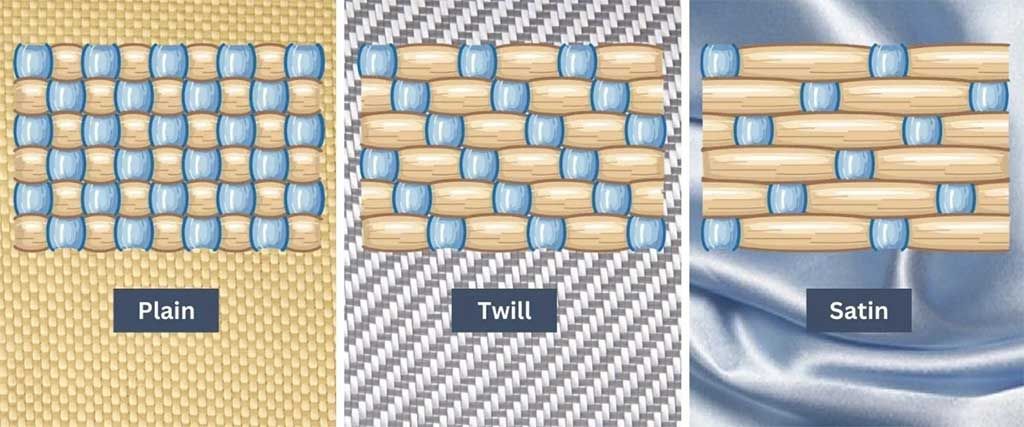
Plain Weave
This is the simplest and most widely used woven construction. In this structure, each weft yarn alternates over one warp yarn and under the next, creating a balanced pattern with the highest possible interlacing points.
Because the yarns are secured so frequently, plain weave fabrics are generally stable, durable, and resistant to snagging. They also provide an even surface that accepts printing, dyeing, and finishing treatments exceptionally well.
Common examples include:
-
Poplin
-
Broadcloth
-
Lawn
-
Voile
-
Muslin
-
Chiffon
-
Organza
-
Canvas
Although these fabrics share the same basic construction, they can behave very differently depending on yarn size, fiber content, weight, and finishing processes. For example, chiffon and organza are both lightweight plain weaves, yet chiffon creates soft, fluid movement while organza offers crisp structure and volume. Likewise, canvas uses plain weave to produce a dense, highly durable fabric suitable for bags, outerwear, and workwear.
Plain weave is often selected when consistency, dimensional stability, and versatility are the primary design goals.
Twill Weave
One of the most common questions in apparel fabric construction is plain weave vs. twill. While both are fundamental weave structures, they produce noticeably different performance characteristics.
Unlike plain weave, twill is created by offsetting the interlacing pattern, producing the distinctive diagonal lines, or wales, visible across the fabric surface. This construction allows yarns to move more freely while maintaining excellent strength, resulting in fabrics that generally drape better, resist wrinkles more effectively, and withstand repeated wear.
Common twill fabrics include:
-
Denim
-
Chino
-
Gabardine
-
Drill cloth
-
Serge
Right-Hand Twill vs. Left-Hand Twill
Not all twills are woven in the same direction, this is where right-hand vs. left-hand twill comes in.
Right-hand twill creates diagonal ribs that run from the lower left to the upper right. This is the most common twill direction and is frequently used in denim because it produces a durable fabric with a distinctive surface texture.
Left-hand twill forms diagonals in the opposite direction. When paired with right-twist yarns (the most common twist direction), left-hand twill creates a softer hand because the weave and yarn twist work in opposition, allowing the fabric to relax.
Some manufacturers also use broken twill, which periodically reverses the diagonal pattern. This construction helps reduce twisting after laundering and is commonly used in premium denim. While these variations may appear subtle, they demonstrate how small adjustments in woven fabric construction can influence both appearance and performance.
Satin Weave
Fewer interlacing points between warp and weft yarns, allow longer yarn floats to remain visible on the fabric surface. These floats create the smooth texture, elegant drape, and characteristic luster associated with satin fabrics.
Because fewer interlacings secure the yarns, satin generally provides less abrasion resistance than plain weave or twill. The longer yarn floats create its signature smooth surface and elegant drape, but they also make the fabric more susceptible to snagging and surface wear. This delicate construction makes satin an ideal choice for garments where fluid movement, softness, and visual appeal are the priority.
Common applications include:
-
Eveningwear
-
Bridal apparel
-
Formal dresses
-
Luxury blouses
-
Decorative linings
For products where fluid movement and visual elegance are essential, satin remains one of the most recognizable woven fabric types.
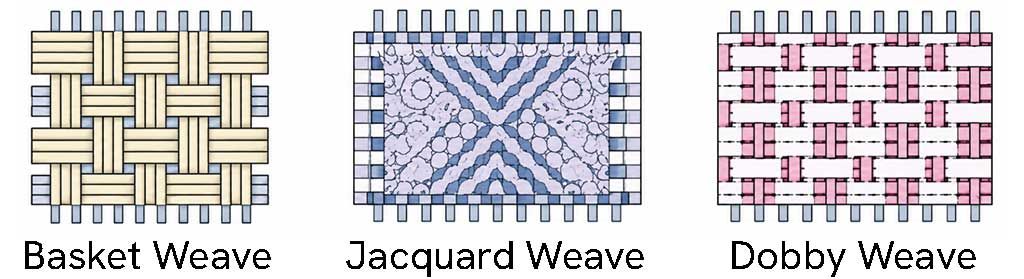
Basket Weave
In this variation of plain weave, two or more warp yarns interlace with two or more weft yarns as a group rather than individually. The basket weave creates a softer, more textured surface while maintaining much of the stability associated with plain weave.
Basket weaves often provide improved flexibility and a fuller hand, making them popular for casual shirting and lightweight jackets.
Common examples include:
-
Oxford cloth
-
Monk's cloth
-
Panama weave
Although basket weave appears visually simple, the grouped yarn structure gives it a distinct texture that differentiates it from traditional plain weave fabrics.
Ripstop
This engineered construction improves tear resistance without adding excessive weight. During ripstop weaving, heavier reinforcement yarns are inserted at regular intervals, creating a subtle grid pattern throughout the fabric. If the fabric is punctured or torn, these reinforced sections help prevent the damage from spreading further.
Ripstop fabrics are commonly used in:
-
Outdoor apparel
-
Performance jackets
-
Military uniforms
-
Backpacks
-
Technical gear
Ripstop demonstrates how woven fabric construction can be engineered to solve specific performance challenges rather than simply creating visual interest.
Jacquard
Complex designs become part of the fabric itself, unlike basic weave structures that repeat simple patterns. Individual warp yarns are controlled independently during weaving, enabling intricate motifs, florals, geometrics, and decorative textures. Due to the pattern being woven directly into the textile, jacquard fabrics often provide greater visual depth and durability than surface-applied designs.
Common applications include:
-
Luxury apparel
-
Eveningwear
-
Upholstery
-
Decorative textiles
-
Fashion accessories
Brocade is one well-known example of a jacquard fabric, recognized for its elaborate woven patterns and dimensional appearance.
Dobby
Specialized looms create small geometric designs woven directly into the fabric. Unlike jacquards, which can produce highly intricate motifs, dobby weaves typically feature subtle repeating textures that enhance visual interest without overwhelming the design. These woven patterns can also influence fabric performance by improving breathability, texture, or drape depending on the construction.
Dobby fabrics are frequently used for:
-
Dress shirts
-
Blouses
-
Lightweight dresses
-
Home textiles
For brands seeking understated texture and elevated design, dobby offers an excellent balance between functionality and aesthetics.
Specialty Weaves
Beyond the most common weave structures, several specialty weaves achieve distinct textures and performance characteristics. Seersucker alternates between taut and slack yarns to create its signature puckered surface, improving airflow and reducing fabric contact with the skin. Piqué features raised geometric patterns that add texture while enhancing breathability, making it popular for polo shirts and performance apparel. Corduroy is a cut-pile woven fabric with parallel raised ribs (wales) which provide warmth, durability, and a soft hand.
These constructions demonstrate how weaving techniques create fabrics with unique functional and aesthetic qualities.
Pro Tip: Don't choose a weave based solely on appearance. Evaluate how each construction supports the garment's intended function. The most successful products align woven fabric construction with performance requirements rather than trends alone.
Choosing the Right Weave for Your Garment
The right weave can make the difference between a fabric that looks appropriate and one that actually performs. Understanding how different constructions affect drape, durability, texture, and stability helps product teams evaluate fabric options with confidence.
Weave structure is one piece of the equation. It works alongside fiber content, yarn type, weight, and finishing to determine how a textile behaves. Brands that understand these relationships make better sourcing decisions and develop garments that deliver on both design intent and customer expectations.
Coming Up Next
Beyond weave structure, understanding fabric specifications is essential for making informed sourcing decisions.
In the next article, Evaluating Woven Fabric Specifications, we explore thread count, fabric density, yarn count, stretch types, fabric weight, and how finishing treatments affect performance.
When designing a new product, how do you approach fabric?
FAQ
What's the difference between plain weave and twill weave?
Plain weave interlaces each weft yarn over one warp yarn and under the next, creating a stable, tightly secured surface. Twill weave offsets that interlacing pattern to create diagonal wales, which lets yarns move more freely, resulting in better drape and wrinkle resistance.
What is the difference between right-hand and left-hand twill?
Right-hand twill produces diagonal ribs running from lower left to upper right and is the most common direction used in denim. Left-hand twill runs in the opposite direction and, when paired with right-twist yarns, tends to relax into a softer hand over time.
Why does the satin weave feel smoother than other weaves?
Satin weave uses fewer interlacing points, allowing longer yarn floats to sit on the fabric surface. Those floats create satin's smooth texture and drape, though they also make the fabric more prone to snagging than plain weave or twill.
What's the difference between jacquard and dobby weaves?
Jacquard looms control individual warp yarns independently, allowing intricate, large-scale motifs to be woven directly into the fabric. Dobby looms produce smaller, subtler repeating geometric patterns and are typically used for more understated texture.
How do I choose the right weave structure for a garment?
Match the weave to the garment's function rather than its appearance alone. Consider how much stability, drape, durability, or texture the design requires, then evaluate weave structure alongside fiber content, weight, and finishing.
Related Articles:
Why Woven Construction Matters
Understanding Fabric Weave Structure
Evaluating Woven Fabric Specifications
How Fabric Finishing Shapes Woven Textile Performance
How To Navigate Woven Fabric Sourcing
Getting Started
For readers in the early planning stages:
I have a great idea for a fashion product – how do I start?
Essential Tips for Small Fashion Business Success
Go from Fashion Influencer to Fashion Entrepreneur using Fashion Index
What Is Adaptive Fashion? A Complete Guide to Inclusive Design
On-Demand vs. Batch Manufacturing
Before You Source
For readers preparing to contact suppliers:
Why Apparel Manufacturing Takes Longer Than You Expect
Are You Ready to Get a Sample Made?
11 Common Mistakes in Starting a Fashion Business
Lowering Costs For Start-Up Fashion Brands
How to Write a Sourcing Inquiry That Gets a Response
Understanding Knit Fabric Series
How to Start a Fashion Brand: An Essential Guide
Technical Knowledge
For readers building their production fluency:
A Beginner's Guide to Stitch Types
Thread Characteristics: From Fibers to Finishes
Plant-Based Leather Alternatives
Comments
Loading comments…