✦The Sourcing Brief spotlight to 218k+ subscribers
How To Evaluate Woven Fabric Specifications
A woven fabric specification sheet is a formal document detailing the physical, mechanical, and functional properties as well as environmental ratings of a textile.
This sheet can contain a long list of numbers, materials, and performance claims, but knowing what each one means is essential for making the right sourcing decision. Woven fabrics are influenced by far more than their fiber content or appearance. The way yarns are arranged, the amount of stretch they provide, the weight of the textile, and treatments applied after weaving can all change how a fabric behaves in a finished garment. Understanding these factors helps product developers evaluate whether an existing material meets the performance requirements of the product they’re developing.
Thread Count vs. Fabric Density
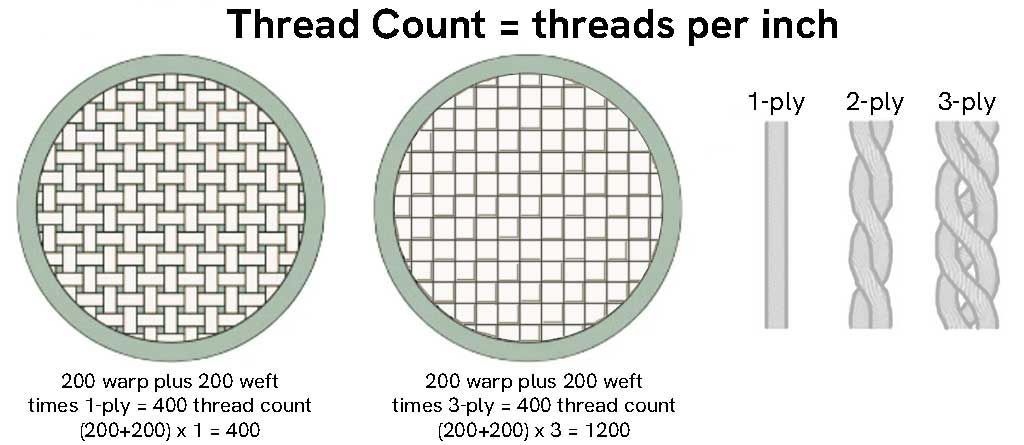
These two terms are often confused, but they measure different things. Thread count refers to the total number of warp and weft yarns per square inch. Fabric density describes how tightly those yarns are packed relative to their size.
Thread count is often one of the first specifications people notice, and commonly associated with higher quality. However, a higher number doesn't automatically mean stronger, softer, or better-suited fabric. Two textiles with similar thread counts can perform very differently if one uses finer yarns in a plain weave while the uses heavier yarns in a twill construction..
Fabric density provides more context. Yarn thickness, weave structure, and fiber type all influence density and ultimately affect performance more than count alone.
Pro Tip: A fabric primarily marketed on thread count may be compensating for weaker specs elsewhere. Look at the full picture before committing.
Yarn Count
This describes the fineness or thickness of the yarn used to construct a fabric. It is an important specification because yarn size affects fabric weight, density, strength, softness, and surface appearance. Depending if thread weight is determined by a fixed weight or fixed length system, a higher count may indicate a finer yarn, so brands should confirm the measurement system being used when comparing fabrics from different suppliers.
Finer yarns can create smoother, lighter fabrics with greater flexibility, while coarser yarns often contribute to heavier, more durable textiles. Evaluating yarn count alongside thread count and fabric density provides a more complete understanding of how a woven fabric is constructed and how it may perform in a finished garment.
Understanding Stretch in Woven Fabrics
Unlike knit fabrics, woven fabrics are designed for stability rather than flexibility. Because the warp and weft yarns are interlaced rather than looped together, most woven fabrics have little natural stretch. However, not all woven fabrics behave the same. Depending on the weave structure, fiber content, and yarn selection, varying degrees of stretch can be achieved to improve comfort and garment performance.
Two-Way Stretch
This construction allows the fabric to extend in one direction, typically across the width of the fabric.
This added flexibility improves comfort while maintaining much of the stability associated with woven construction. Two-way stretch is commonly used in trousers, uniforms, and casual apparel where ease of movement is important without compromising garment structure.
Four-Way Stretch
Four-way stretch allows movement in both the warp and weft directions.
While more common in knit fabrics, some high-performance woven textiles achieve four-way stretch through specialized yarns and engineered constructions. These fabrics are often used in activewear, technical outerwear, and performance apparel where unrestricted movement is essential.
Mechanical Stretch
This type of stretch is achieved through construction rather than elastic fibers. By adjusting the weave pattern or yarn arrangement, manufacturers can introduce controlled flexibility while preserving the appearance and durability of traditional woven fabrics. Because no elastane is required, mechanical stretch fabrics simplify recycling and improve dimensional stability over the garment's lifespan.
Elastane Stretch
Another approach is incorporating elastic fibers such as elastane (also known as spandex or Lycra) into the woven structure. Even a small percentage of elastane can significantly improve comfort, mobility, and recovery, making these fabrics popular choices for denim, tailored garments, workwear, and performance apparel. When sourcing woven fabrics, it's important to understand how the stretch is achieved, as this can influence durability, recovery, care requirements, long-term performance, as well as impact product end-of-life options.
Yarn Type and Fiber Content
Fiber content is often the first specification listed on a fabric swatch, but it represents only one component of overall fabric performance. Natural fibers such as cotton, linen, wool, and silk each offer distinct characteristics, while manufactured fibers, including polyester, nylon, and rayon, provide additional performance benefits depending on the intended application.
Equally important is the type of yarn used to create the fabric. Yarns may be spun, filament, textured, or blended, with each construction influencing the fabric's strength, surface appearance, softness, durability, and overall hand feel. For example, a woven fabric made from long-staple cotton fibers typically produces a smoother, stronger textile than one made from shorter staple fibers. Likewise, blending fibers can balance comfort, durability, wrinkle resistance, moisture management, and cost.
Understanding the relationship between fiber content, yarn type, and woven fabric construction helps brands evaluate fabrics more effectively and communicate more confidently with suppliers during development.
|
Weight |
Common Woven Fabrics |
| 2 - 3 oz. per square yard (∼ 57 - 85 GSM) | Voile, crepe (especially 100% silk or polyester), chiffon, lightweight cotton shirting, lightweight chambray, handkerchief linen |
| 4 - 5 oz. per square yard (∼ 113 - 142 GSM) | Rayon crepe, rayon challis, cotton shirting, chambray, dress weight linen, double gauze & double cloth, charmeuse |
| 6 - 8 oz. per square yard (∼ 170 - 227 GSM) | Tencel and rayon twills, sateen, flannel, oxford cloth, linen twill |
| 9 - 12 oz. per square yard (∼ 255 - 340 GSM) | Denim, cotton twill, corduroy, waterproof fabrics, jacquard, wool melton, , drill cloth, gabardine |
| 12+ oz. per square yard (340+ GSM) | Canvas, duck, upholstery, waxed cotton, wool coating, heavy twill |
Common woven fabric types, from voile and chiffon to denim, canvas, and upholstery sorted by weight.
Fabric Weight (GSM and oz.)
Another essential specification during product development is fabric weight. Most woven fabrics are measured using grams per square meter (GSM) or ounces per square yard (oz/yd²). These measurements describe how much a fabric weighs, not necessarily how thick it appears.
Lighter fabrics generally provide improved breathability, softer drape, and greater comfort in warm-weather garments. Medium-weight fabrics often offer the versatility required for everyday apparel, balancing durability with comfort. Heavier fabrics provide increased structure, opacity, and abrasion resistance, making them well suited for outerwear, workwear, upholstery, and utility products.
While fabric weight is an important consideration, it should never be evaluated in isolation. The same GSM can produce very different results depending on fiber selection, yarn size, weave structure, and finishing processes.
Finish vs. Construction
It's easy to assume that every performance characteristic comes from the way a fabric is woven. In reality, many woven fabrics gain additional functionality through finishing treatments applied after weaving. Construction determines the fabric's inherent characteristics, including its stability, drape, strength, and overall structure. Finishes modify those characteristics to enhance appearance or performance.
Common finishing treatments include:
-
Wrinkle resistance
-
Softening
-
Water repellency
-
Stain resistance
-
Brushing
-
Antimicrobial protection
Some finishes create enhancements that gradually diminish through repeated wear and laundering, while others are designed for greater durability. Understanding the difference between construction and finishing helps brands ask better questions during sourcing and evaluate whether a fabric's performance is built into the textile or applied afterward.
Pro Tip: Know what's built in and what's applied. Characteristics from yarns and construction are permanent. Finishes can fade.
Evaluating the Complete Fabric
The most effective fabric selection comes from looking at the textile as a complete product rather than focusing on one specification. Thread count, density, yarn characteristics, stretch, weight, and finishing each contribute to the final material, but their interaction is what ultimately shapes its performance.
For brands, this broader understanding can make supplier conversations more productive and fabric evaluation more precise. Instead of choosing a material because one specification appears impressive, product teams should consider how its individual characteristics work together to support the garment. This approach helps turn technical fabric information into better sourcing decisions, more reliable products, and fewer surprises during production.
Coming Up Next
The fabric specification sheet describes how the fabric was built. Finishing shapes how it behaves.
In the next article in this series, How Fabric Finishing Shapes Woven Textile Performance, we explore how finishing treatments alter the fabric’s appearance, hand, and performance, and why the method matters as much as the result.
What is one thing you would tell your younger-self about fabric construction?
FAQ
Does a higher thread count mean better fabric quality?
Not on its own. Thread count only measures how many yarns are packed into one square inch. Fabric density, which factors in yarn thickness and weave structure, gives a more accurate picture of how a fabric will actually perform.
What is the difference between thread count and yarn count?
Thread count measures how many yarns fit into one square inch of fabric. Yarn count measures the fineness or thickness of an individual yarn. Two fabrics can share a thread count and still perform differently if their yarn counts don't match.
Can woven fabric stretch without elastane?
Yes. This is called mechanical stretch. Manufacturers achieve it by adjusting the weave pattern or yarn arrangement instead of adding elastic fibers. Because no elastane is involved, mechanical stretch fabrics are often easier to recycle.
What is the difference between two-way and four-way stretch in woven fabric?
Two-way stretch extends in one direction, usually across the width of the fabric. Four-way stretch extends in both the warp and weft directions. Four-way stretch is more common in knit fabrics but can be engineered into high-performance wovens for activewear and technical outerwear.
Is fabric weight the same as fabric thickness?
No. Fabric weight, measured in GSM or ounces per square yard, tells you how much a fabric weighs. It does not tell you how thick the fabric appears or feels, since fiber selection, yarn size, weave structure, and finishing can all change that independently of weight.
How do I know if a fabric's performance comes from its construction or its finish?
Ask the supplier directly. Construction determines a fabric's built-in characteristics, such as stability and drape. A finish is a treatment applied afterward, like wrinkle resistance or water repellency, and some finishes wear off over time while others are more durable.
Related Articles:
Why Woven Construction Matters
Understanding Fabric Weave Structures
How Fabric Finishing Shapes Woven Textile Performance
Getting Started
For readers in the early planning stages:
I have a great idea for a fashion product – how do I start?
Essential Tips for Small Fashion Business Success
Go from Fashion Influencer to Fashion Entrepreneur using Fashion Index
What Is Adaptive Fashion? A Complete Guide to Inclusive Design
On-Demand vs. Batch Manufacturing
Before You Source
For readers preparing to contact suppliers:
Why Apparel Manufacturing Takes Longer Than You Expect
Are You Ready to Get a Sample Made?
11 Common Mistakes in Starting a Fashion Business
Lowering Costs For Start-Up Fashion Brands
How to Write a Sourcing Inquiry That Gets a Response
Understanding Knit Fabric Series
How to Start a Fashion Brand: An Essential Guide
Technical Knowledge
For readers building their production fluency:
A Beginner's Guide to Stitch Types
Thread Characteristics: From Fibers to Finishes
Plant-Based Leather Alternatives

Comments
Loading comments…