✦The Sourcing Brief spotlight to 218k+ subscribers
Woven Fabric Innovation: New Fibers, Recycled Yarns, and Advanced Weaving
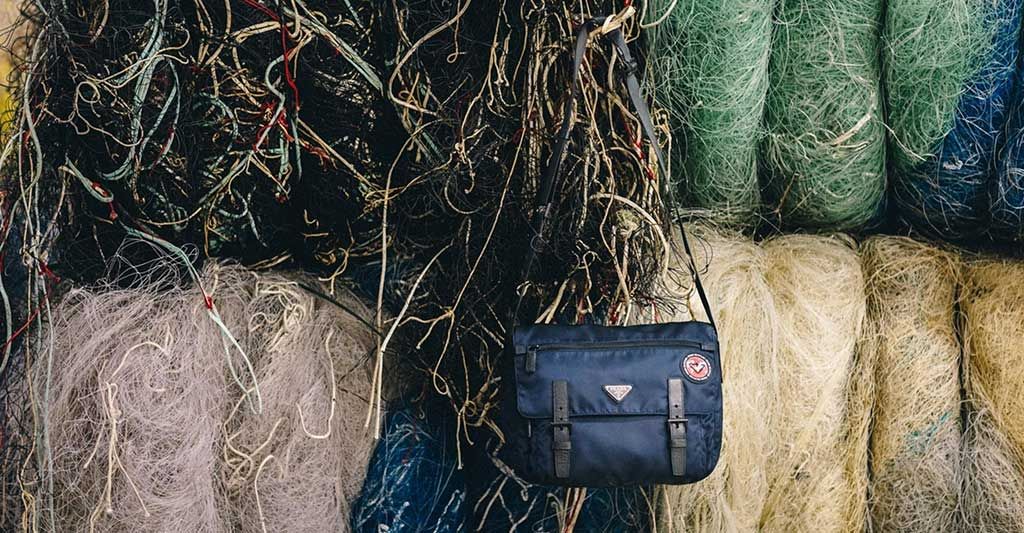
A Prada bag that started as a fishing net. A shirt woven partly from seaweed.
Woven fabric innovation refers to new fibers, recycled feedstocks, and weaving technologies changing what woven textiles are made from and how they are constructed. That idea is becoming more mainstream. Materials once treated as waste are being turned back into yarn, familiar fibers are being developed with new feedstocks, and resources outside the traditional textile supply chain are finding their way into fabric.
For fashion, the possibilities are exciting, but a new material has to do more than tell a good story. It still needs to feel right in the hand, perform in the garment, meet a brand’s price point, and be available when production begins. Some of these materials are already doing that at commercial scale. Others are getting closer.
Understanding these materials and which are production-ready at scale gives brands a clearer view of what they can source today, what is moving closer to scale, and what is on the horizon.
Plant-Based and Next-Generation Fibers
From shirting to lightweight denim, regenerated cellulosic (plant-based) fibers are already widely used in woven apparel, offering softness, breathability, drape, and versatility. What is changing is where those fibers come from and what goes into making them.
One example is TENCEL Lyocell, an established fiber made from wood-based cellulose. Through REFIBRA technology, Lenzing incorporates up to 30% recycled cotton pre-consumer post-industrial cotton scraps from garment manufacturing waste into new TENCEL Lyocell fibers. This gives textile waste another purpose while maintaining the soft hand, drape, breathability, and moisture management valued in woven apparel. Certifications from the Forest Stewardship Council (FSC) and Programme for the Endorsement of Forest Certification (PEFC) help brands identify more responsibly sourced wood used in fiber production.
Banana and Seaweed Fibers
A promising material still has to prove it can perform, be produced consistently, and move towards the volumes brands need. Two sources drawing attention right now are banana stalks and seaweed.
A banana plant only fruits once, and its trunk-like stalk is cut down after harvest. Farmers typically leave the stalk to rot or burn it. Alternatively, they can collect and sell the stalks to processors, who strip them mechanically to release long, strong fibers, then clean and soften the fibers for spinning. Banana fiber is coarse on its own; therefore, it’s typically blended with a softer fiber for apparel.
ANR Genuine Style, based in West Bengal, India, develops banana-blend wovens for apparel. Lab results shared with Fashion Index describe a lightweight, biodegradable fabric of about 116 GSM with very high air permeability. Suitable for warm-weather shirtings and dresses. Numbers like these matter more to a sourcing team than a sustainability story, because they can be matched against product requirements.
The next step for banana fiber is the one every new fiber faces: providing consistency, availability, and production capacity brands need to source at scale.
Seaweed is reaching fabric by two different routes. The established one is SeaCell, from smartfiber AG, which incorporates seaweed into a wood-based lyocell made in a closed-loop process. It has been available for years and is typically blended with other fibers to create soft, breathable textiles.
A newer route is to make the fiber exclusively from seaweed. Keel Labs produces Kelsun from seaweed-derived biopolymers, and says it was designed to run on existing textile machinery. It first appeared on Stella McCartney’s Summer 2024 runway. Outerknown released a limited-edition run of its Blanket Shirt, a woven button-down shirt, in a blend of organic cotton and Kelsun, the material’s first commercial product application.
Kelsun is at the limited-run stage. How widely it’s adopted will depend on how quickly supply can grow.
Recycled Fibers and Yarns
Some new materials don’t begin with new resources. They begin with something fashion or another industry has already used
ECONYL, developed by Aquafil, is one example. Nylon 6 waste, including fishing nets, fabric scraps, old carpets, and industrial waste, is chemically broken down and rebuilt into new nylon 6. Because the material is remade at the molecular level, Aquafil says it performs like virgin nylon. ECONYL yarn is made by recycling discarded plastic collected from landfills and oceans worldwide.
Prada first used ECONYL in Re-Nylon, a sustainable initiative launched in 2019 to replace all virgin nylon 6 in its products with regenerated nylon 6. Since its inception, ECONYL has replaced standard nylon 6 across bags, ready-to-wear, and footwear. The material is still synthetic, so long-term microfiber shedding and end-of-life management still need to be addressed.
Textile-to-textile recycling starts with fashion’s own waste. Current mechanical recycling methods shred cotton textile waste into fibers that can be respun. The process shortens the staple length, resulting in weaker fibers with rougher handfeel that affects consistency, so mills usually blend recycled cotton with longer fibers; this is most common in denim, twill, and other heavier wovens.
Blended fabrics are even harder to recycle because the fibers must be separated before they can be recycled.
Scale remains the challenge. Textile-to-textile recycling accounts for only about 1% of global fiber production. Recycled content must meet the same standards for fiber quality, durability, traceability, and consistency.
Deadstock Fabric Programs
Deadstock is finished fabric that was never used. For many companies, it builds up for ordinary reasons, including a mill’s minimum order being larger than the brand needs, a design being canceled after the fabric was ordered, or a color being changed and yardage can’t be overdyed. Deadstock programs collect these overruns and surplus rolls and sell them to other designers.
For capsule collections and smaller runs, deadstock offers quality material in small quantities, below mill minimums, without producing new yardage and helps tackle the massive textile waste problem in the fashion industry. A segment of the industry has built its business model around it.
The challenge is repeatability. Once a deadstock fabric is gone, the same quality, color, or specification may not be available again, so it works best where limited availability suits the collection. Documentation is the other gap. Surplus fabric often doesn’t come with fiber content, test reports, or certifications, so brands may need their own testing before committing to it for production.

Advanced Weaving and Fabric Development
New fibers are only part of what is changing woven textiles. Advances in fabric construction are also changing how woven materials are designed and perform.
Digital Weaving and 3D Woven Textiles
Most woven apparel begins as flat fabric, then gets cut and sewn into shape. Digital tools are changing both ends of that process..
Computer-controlled Jacquard looms have woven complex patterns for decades. What is newer is the digital workflow around them: designs move directly from screen to loom, so detailed patterns can be woven into the fabric itself in shorter runs with more customization, without relying on printing or other surface applications.
3D weaving goes further by weaving shapes, not just patterns. Instead of producing flat yardage to be cut later, the loom builds multilayered or shaped pieces directly from yarn, reducing cutting waste. San Francisco based Unspun uses this approach to weave garment components directly from yarn and has produced 3D-woven pants with designers Eckhaus Latta. The company is moving from development toward commercial production.
The technology is used for technical apparel, protective clothing, and lightweight performance materials, where designers can engineer structure and function into the textile. Its value for fashion will depend on whether it runs efficiently, reliably, and at a scale that works for the intended product.
Biodegradable Textile Technologies
Synthetic fibers remain in the environment long after a product is discarded or fibers are shed. CiCLO biodegradable technology addresses this by embedding a sustainable additive into polyester and nylon during manufacturing. This additive helps the synthetic materials biodegrade like natural fibers, reducing microplastic pollution. The additive maintains the base material’s dyeability, durability, and recyclability while integrating seamlessly into existing manufacturing infrastructure for scalability.
naNea is a biodegradable co-polyester developed by OceanSafe. This soft material offers moisture-wicking and drying properties comparable to polyester. It is also inherently flame retardant with high tear strength and low pilling. Its technical properties make it a strong choice for sportswear, outerwear, and functional apparel. naNea can be recycled with conventional polyethylene terephthalate (PET) polyester in the same process. Mills can process it on their existing textile equipment, lowering the barriers for brands exploring biodegradable synthetics. It undergoes 93% biodegradation within 99 days under controlled marine conditions.
Mechanical Stretch Woven Fabrics
Stretch doesn’t always require elastane.
Mechanical stretch builds flexibility into woven fabrics through the yarn, the weave, and finishing. Coiled yarns act like a spring. Weave construction and finishing give the fabric room to extend and recover.
For trousers, activewear, and performance apparel, mechanical stretch offers comfort and mobility without elastane. Caution: many mechanical stretch fabrics are polyester, but not all.
Commercial use still comes back to performance. Mechanical stretch is usually more modest than elastane stretch, so brands need to confirm the fabric delivers on stretch, recovery, shape retention, and durability the garment requires.
New Material Readiness
| Material | Feedstock | Commercial Stage |
| TENCEL Lyocell with REFIBRA | Wood pulp plus cotton scraps | Available at scale |
| ECONYL | Nylon 6 waste | Available at scale |
| naNea | Co-polyester | Available at scale |
| SeaCell | Lyocell with seaweed | Available, typically blended |
| Mechanically recycled cotton | Textile waste | Available, blend-limited |
| Deadstock | Surplus yardage | Available, not repeatable |
| Banana-blend | Banana stalk fiber | Approaching scale |
| Kelsun | Seaweed biopolymers | Limited runs |
From Material to Product
Material innovations are expanding options available to brands and sourcing teams.
Regenerated waste is already entering commercial collection, textile-to-textile recycling is creating new pathways for existing garments, and developments in fibers and weaving continue to expand what woven fabrics can become.
The question is whether an innovative material can deliver the right performance, quantity, price, and timeline for the product. Commercial readiness matters as much as performance potential when moving an innovation into production.
Understanding what is available now, what is approaching scale, and what still needs time gives brands a clearer way to evaluate where new materials fit into their sourcing strategies.
Coming Up Next
In How Woven Fabrics Are Dyed, Finished, and Tracked, we’ll look at what’s changing across textile production. New technologies are changing how fabrics move through manufacturing and finishing, while traceability advances are giving brands a clearer view of their materials throughout the supply chain.
Which woven innovations do you think will shape the future of fashion?
FAQ
What is woven fabric innovation?
Woven fabric innovation covers new fibers, recycled feedstocks, and weaving technologies that change what woven textiles are made from and how they are constructed. Examples include lyocell made with recycled cotton scraps, regenerated nylon, seaweed-based fibers, and 3D weaving.
Which innovative woven materials are available at commercial scale today?
TENCEL Lyocell with REFIBRA technology, ECONYL regenerated nylon, SeaCell blends, and mechanically recycled cotton are all commercially available. Deadstock fabric is also available now, though the same fabric usually cannot be reordered.
Is seaweed fabric commercially available?
Yes, in two forms. SeaCell incorporates seaweed into a wood-based lyocell and has been available for years. Kelsun, made from seaweed biopolymers by Keel Labs, is in limited production, with its first commercial garment released by Outerknown in 2024.
What is the difference between ECONYL and virgin nylon?
ECONYL is nylon 6 regenerated from waste such as fishing nets, fabric scraps, and old carpets, while virgin nylon is made from new petroleum-based raw material. ECONYL is still a synthetic fiber, so microfiber shedding and end-of-life management remain considerations.
What is mechanical stretch in woven fabric?
Mechanical stretch is flexibility built into a woven fabric through yarn behavior, weave construction, and processing rather than adding elastane. It gives trousers, activewear, and performance apparel comfort and mobility with a simpler fiber composition.
Related Articles
Woven Fabric Series
Why Woven Construction Matters
Understanding Fabric Weave Structure
Evaluating Woven Fabric Specifications
How Fabric Finishing Shapes Woven Textile Performance
How To Navigate Woven Fabric Sourcing
Woven Fabric Innovation: New Fibers, Recycled Yarns, and Advanced Weaving
How Woven Fabrics Are Dyed, Finished, and Tracked
Getting Started
For readers in the early planning stages:
I have a great idea for a fashion product – how do I start?
Essential Tips for Small Fashion Business Success
Go from Fashion Influencer to Fashion Entrepreneur using Fashion Index
What Is Adaptive Fashion? A Complete Guide to Inclusive Design
On-Demand vs. Batch Manufacturing
Before You Source
For readers preparing to contact suppliers:
Why Apparel Manufacturing Takes Longer Than You Expect
Are You Ready to Get a Sample Made?
11 Common Mistakes in Starting a Fashion Business
Lowering Costs For Start-Up Fashion Brands
How to Write a Sourcing Inquiry That Gets a Response
Understanding Knit Fabric Series
How to Start a Fashion Brand: An Essential Guide
Technical Knowledge
For readers building their production fluency:
A Beginner's Guide to Stitch Types
Thread Characteristics: From Fibers to Finishes
Plant-Based Leather Alternatives


Comments
Loading comments…